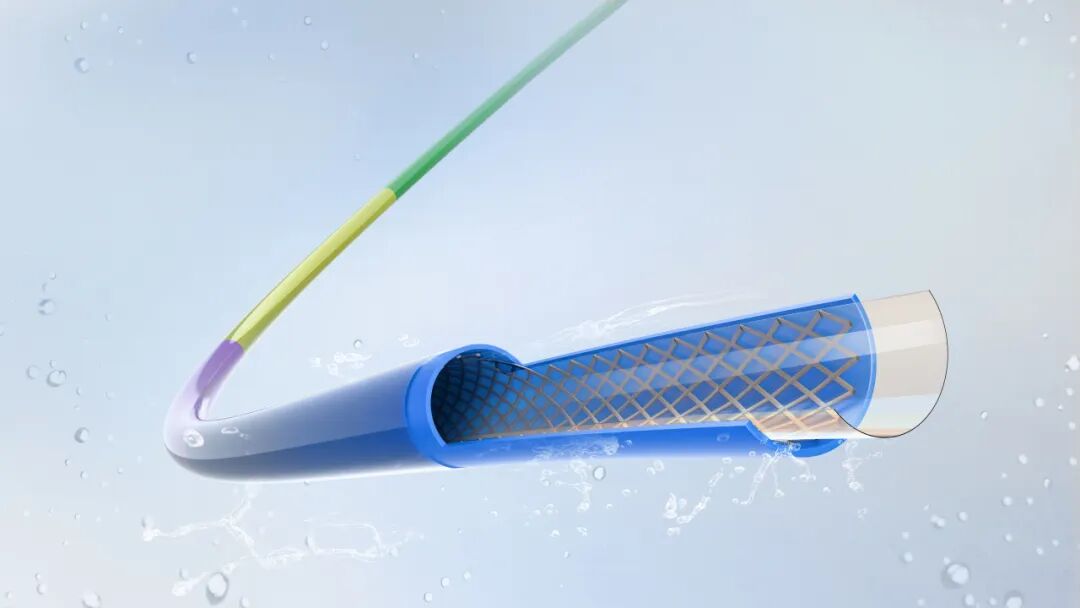
By 2026, the medical device coating industry had clearly entered a new development cycle of rapid iteration and comprehensive upgrading, with overall industry growth and technological innovation far exceeding previous levels. As global medical safety standards continue to evolve, the regulatory framework and compliance system for medical device coatings are undergoing dynamic optimization and continuous tightening. Compliance requirements and certification standards for specific product categories are becoming increasingly detailed, placing higher demands on the safety, stability, and compatibility of coating materials.
Simultaneously, a large number of new functional coating technologies have broken through technological barriers, gradually completing laboratory research and development, repeated testing, and performance verification. They have officially moved beyond the research stage, achieving large-scale mass production and commercialization, completely reshaping the industry's traditional technological landscape. Furthermore, after several years of industry adjustments and supply chain restructuring, the upstream and downstream supply chain links for medical device coatings, including raw material supply, production support, and distribution systems, have all undergone significant changes compared to five years ago. The stability, localization rate, and customization capabilities of the supply chain have greatly improved. The simultaneous and intertwined transformations in the three core dimensions of regulation, technology, and supply chain have given rise to a large number of new industry pain points, technical challenges, and development opportunities, forming many new topics worthy of in-depth analysis, exploration, and discussion by industry practitioners.
Alright, let's start with the big picture.
The global medical device coating market is projected to hit **17.4billionin2026**andclimbto**29.3 billion by 2033* — that's a CAGR of *7.7%**. Not bad for a niche that most people outside the industry have never heard of.
But where's that growth actually coming from? Let's look at the segments:
Segment | Market Share | Estimated Value (2025) |
Hydrophilic Coatings | 40.26% | ~$5.85B |
Antimicrobial Coatings | 24.76% | ~$3.60B |
Anticoagulant Coatings | 14.96% | ~$2.17B |
Drug-Eluting Coatings | 12.10% | ~$1.76B |
Others | 7.92% | ~$1.15B |
Hydrophilic coatings dominate. If a device slides into the body, there's a decent chance it's got a hydrophilic layer on it. We'll get into why that is in Trend 1.
On the application side, cardiovascular devices account for 32.65% of total demand. That's the single largest chunk. But here's what caught our attention — neurovascular interventions are growing at 10.52% CAGR, the fastest of any sub-segment. Stroke thrombectomy, flow diverters, intracranial access devices — the neuro space is absolutely booming, and coating demand is riding that wave.
One more data point worth flagging: the heparin coating sub-market alone is valued at 1.45Bin2025,expectedtoreach2.31B by 2032 (CAGR 6.85%). And get this — covalently bonded heparin accounts for 57.6% of that market. Physical adsorption is losing ground. Fast. We'll explain why that matters in Trend 2.
hydrophilic coatings are the workhorse of the medical device world. They've been around for decades, but in 2026, they're more relevant than ever.
hydrophilic coatings hold a 40.26% market share, with the standalone hydrophilic coating market valued at **3.1Bin2025**andprojectedtogrowto**5.2B by 2034* at a 6.1% CAGR. In catheter and guidewire applications specifically, the coverage rate hit *81.63% in 2025**. That's not a "nice-to-have" anymore — it's basically the default.
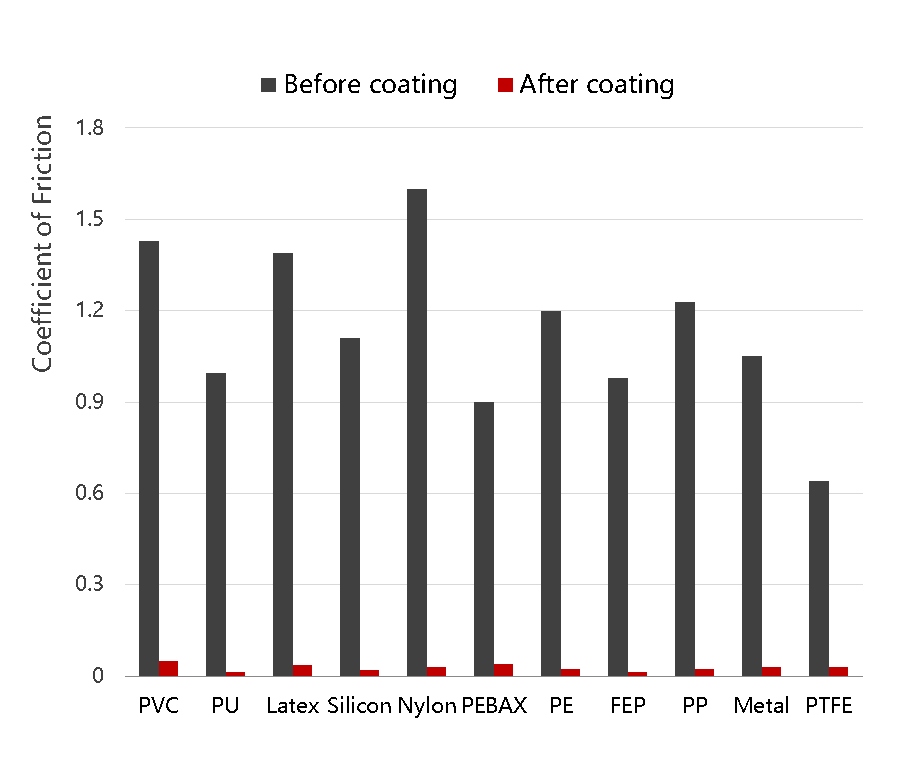
Why? Because friction kills procedures. When you're threading a 0.035" guidewire through a tortuous vascular path, every bit of friction matters. Hydrophilic coatings — typically PVP- or PEG-based — create a slick, water-activated surface that slashes the coefficient of friction. Some next-gen formulations are hitting COF values as low as 0.02. That's almost ice-on-ice territory.
But here's the real shift happening in 2026: UV-curable hydrophilic coatings are replacing traditional wet-chemistry processes. The old method — dip coating with multi-step solvent baths, overnight curing, quality checks that take days — that's being squeezed out. UV-cured variants can cut processing time by 80% or more while maintaining (or improving) bond durability. We'll dig into that more in Trend 3.
This one's been building for a few years, but 2026 feels like the tipping point.
Heparin — the anticoagulant that's been saving lives since the 1920s — can be applied to device surfaces in two main ways: physically adsorbed or covalently bonded. The difference? It's night and day.
Physically adsorbed heparin washes off. It's like spraying cologne on a raincoat — it'll smell nice for about five minutes, and then it's gone. Covalently bonded heparin, on the other hand, is chemically locked to the surface. It doesn't leach. It doesn't degrade in hours. It lasts through the entire procedure and — in some validated systems — through the shelf life of the device.
That's why covalently bonded heparin now commands 57.6% of the heparin coating market. The regulatory environment is tightening around leachable substances, and clinicians want performance that doesn't fade mid-procedure. The shift isn't just preference — it's practically mandatory now for anything that contacts blood for extended periods.
The heparin coating market overall is growing from **1.45B(2025)to2.31B (2032)** at a 6.85% CAGR. And with cardiovascular devices driving over a third of all coating demand, this sub-segment has serious tailwinds.
if you're still spec'ing physically adsorbed heparin for a new blood-contacting device launch, you should probably have a conversation with your regulatory team first.
Traditional wet-chemistry coating processes — the ones that involve solvent dipping, multi-hour ovens, and prayer-based quality control — are being systematically replaced by UV-curing technology. And this isn't a "maybe someday" trend. It's happening right now, at scale.
Companies like Freudenberg Medical (with their LUBRITEQ™ platform) and VitaCoat are running UV-cured coating lines in full production. Not pilots. Not demos. Production.
Why does this matter? Three reasons:
Speed. UV curing can reduce processing time by 80%+. What used to take hours in a convection oven takes seconds under a UV lamp. That's not incremental — it's transformational for throughput.
Consistency. UV-cured coatings tend to show more uniform thickness, better adhesion, and fewer batch-to-batch variations. When you're coating a 0.014" guidewire that needs to perform identically across 500,000 units, consistency isn't a luxury — it's survival.
Sustainability. Less solvent, less energy, less waste. Regulatory bodies are paying attention to the environmental footprint of manufacturing processes, and UV curing is a no-brainer on that front.
The catch? UV-curable formulations require different chemistry expertise. You can't just take your existing wet-chemistry formulation and shine a light on it. The polymer science is different. The equipment is different. The process validation approach is different.
Nano-enabled coatings — think silver nanoparticle antimicrobials, nano-textured surfaces for osseointegration, nanoparticle-loaded drug delivery matrices — have been in development for years. But 2026 is the year we're seeing them genuinely move into pilot-stage programs at major medtech companies.
Why the delay? Honestly, a lot of it comes down to regulatory uncertainty. The FDA and EU MDR bodies are still figuring out how to evaluate nano-scale features in coatings. Characterization methods aren't standardized. Toxicology pathways for nanomaterials are still evolving.
But the science is undeniable. Nano-textured surfaces can drive specific cell responses — promoting endothelialization while resisting platelet adhesion, for example. Smart-responsive coatings that release anticoagulants only when they detect thrombin formation? That's not science fiction anymore. It's in bench testing.
A few areas to watch:
• Bio-resorbable coatings that dissolve on a programmed timeline, releasing therapeutic agents as they go
• pH-responsive antimicrobial coatings that activate when infection markers change the local pH
• Electro-active coatings for neural interfaces that reduce glial scarring
The market isn't huge yet — these are pre-revenue for the most part. But if you're not at least tracking these developments, you'll be caught flat-footed when they hit commercial scale in the 2028-2030 window.
North America still holds 33.5% of the global market — the largest single region. But the Asia-Pacific region is growing fastest, with a CAGR exceeding 8.2%. That's significantly above the global average of 7.7%.
What's driving this? A few things:
Manufacturing capacity. China, India, and Southeast Asia have built serious medical device manufacturing infrastructure over the past decade. CDMO providers in Shenzhen, Suzhou, and Bangalore are running ISO 13485-certified coating lines that rival anything in the US or Europe — often at 30-40% lower cost.
Regulatory maturation. China's NMPA has been aligning its frameworks more closely with FDA and EU MDR requirements, making it easier to develop in APAC and register globally. That's reducing the "regulatory risk" perception that kept some OEMs away.
Talent density. Let's be honest — the polymer chemistry and surface science talent pool in China is enormous. Universities are churning out graduates with coating-specific expertise, and companies are investing heavily in R&D.
OEMs that used to source all their coated components from US or European suppliers are now splitting orders across multiple geographies. It's not about chasing cheap labor — it's about resilience, speed, and access to specialized capabilities.
If your supply chain strategy still assumes everything happens in one country, you're ignoring the reality of the market.
The regulatory environment for medical device coatings in 2026 is... complicated.
EU MDR is still biting. The European Medical Device Regulation (EU 2017/745) has been in effect for years now, but its full impact on coating processes is still playing out. Notified bodies are scrutinizing coating biocompatibility data with more rigor than ever. If your coating contains substances that are absorbed systemically — even in trace amounts — you need to justify that with robust toxicology packages.
FDA's approach to nanomaterials is evolving. The FDA has released draft guidance on nano-enabled medical devices, but it's still in flux. Companies piloting nano-coatings are essentially navigating in partial darkness — the agency is figuring it out as they go.
China's NMPA is accelerating. On the flip side, NMPA has been streamlining approval pathways for certain Class II coated devices, which is part of what's driving that 8.2%+ APAC growth rate. If you're sourcing from China, the regulatory story is actually getting better — not worse.
Substance restrictions are tightening globally. PFAS (per- and polyfluoroalkyl substances) — the "forever chemicals" — are under increasing scrutiny. Some coating formulations have historically relied on fluorinated compounds for water/oil resistance. That's becoming a liability in multiple jurisdictions. Expect more coating chemists to be working on PFAS-free alternatives over the next 2-3 years.
Regulatory compliance costs are rising across every major market. Companies that haven't invested in regulatory intelligence capabilities are going to struggle — and not just with new product launches, but with maintaining existing clearances.
North America (33.5% share) still leads in absolute terms. The US alone accounts for the bulk of that, driven by strong cardiovascular and orthopedic device sectors, high procedure volumes, and a mature reimbursement environment. But growth is steady rather than spectacular — closer to 6-7% CAGR. The US market is mature, and competition among coating service providers is intense.
Europe (~28% share) is dealing with the EU MDR hangover. Some smaller coating companies have exited the market rather than bear the compliance costs, which has consolidated demand toward larger players like Surmodics and Biocoat. Germany remains a strong market for precision coating applications (surgical tools, orthopedic implants), while the UK — post-Brexit, with its own UKCA framework — is carving out a slightly different regulatory path.
Asia-Pacific (fastest growing, 8.2%+ CAGR) is the story of 2026. China is the engine, but don't sleep on India (growing medical tourism driving device demand) and Southeast Asia (Singapore and Malaysia emerging as quality-focused manufacturing hubs). The CDMO model is particularly strong here — companies that want world-class coating without building their own lines are finding capable partners in the region.
Latin America and Middle East/Africa are smaller markets but worth watching. Brazil has a growing domestic device industry, and the UAE/Saudi Arabia are investing in healthcare infrastructure that will drive demand for coated devices over the next 5 years.
Geographic diversification isn't optional anymore. The companies that win in 2027-2030 will be the ones that built multi-regional capabilities starting now.
1. The hydrophilic coating market will cross $4B by 2028.
With catheter and guidewire procedure volumes growing globally and new applications emerging (robotic-assisted surgery tools, temporary implant coatings), demand isn't slowing down. The innovation will be in application methods — faster curing, better metal adhesion, thinner coatings that perform better.
2. Covalently bonded heparin will push past 65% of the heparin market by 2028.
Physical adsorption is on its way out for anything other than short-term, low-risk applications. The regulatory pressure and clinical evidence are both pointing the same direction.
3. UV curing will become the default process for new coating lines.
Within 3-4 years, specifying wet-chemistry processing for a new coating program will require justification — it'll be the exception, not the rule.
4. Nano-enabled coatings will see their first commercial approvals.
Maybe 2-3 products by 2029. Not a flood — but enough to establish regulatory precedent and clear a path for others.
5. APAC-based coating CDMOs will capture 35%+ of global outsourced coating revenue.
The cost, quality, and speed advantages are too significant to ignore. Some European and US coating companies will respond by opening APAC facilities of their own.
6. PFAS-free coating platforms will become a competitive differentiator.
It's not just about compliance — it's about marketing. Device companies will start advertising "PFAS-free coatings" as a selling point to hospital procurement teams.
OK, we've covered the macro picture. Now let's talk about what this looks like in practice — and here's where jMedtech comes in as a useful reference point for understanding how leading CDMOs are responding to these trends.
What's interesting is their coating portfolio, because it lines up almost perfectly with the market data:
• Hygea® Heparin Antithrombogenic Coating — covalently bonded heparin, UV and thermal curing options, nano-level coating precision, validated across 11 product categories. That's a direct response to Trend 2.
• jAqua® Hydrophilic Lubricious Coating — patented UV-curable process, >95% friction reduction, cure time reduced by over 80%. That's Trend 1 and Trend 3 combined.
• jHydro® Metal-Specific Hydrophilic Coating — PVP-based, COF of 0.02, designed specifically for metallic substrates. Addresses one of the harder challenges in hydrophilic coating — getting it to stick to metal.
• jHemo PC® Phosphorylcholine Hemocompatible Coating — biomimetic phosphorylcholine chemistry for blood-contacting devices. A different approach to hemocompatibility that complements the heparin platform.
• jGuard® Superlubricated Antibacterial Coating — combines lubricity with antimicrobial properties, hitting two functional requirements in one layer.
Their automated coating systems run at 150,000–200,000 units per year, with tolerances of ±0.0003" (7.6μm), concentricity ≥95%, and roundness ≥99%. That's the kind of precision that matters when you're coating neurovascular devices where every micron counts.
And here's a notable strategic move — jMedtech became a strategic shareholder of Hydromer, one of the established players in the hydrophilic coating chemistry space (and one of the top coating companies alongside Freudenberg Medical, Surmodics, Biocoat, and Specialized Coating Systems). That's not just a financial investment — it's a signal that jMedtech is positioning itself at the intersection of coating chemistry and full-device manufacturing.
The global medical device coating market is projected to reach approximately 17.4billionin2026,growingata7.729.3 billion by 2033. Hydrophilic coatings are the largest segment at 40.26% share, followed by antimicrobial (24.76%), anticoagulant (14.96%), and drug-eluting coatings (12.10%).
Covalently bonded heparin is chemically attached to the device surface, meaning it doesn't leach or wash off during use. Physically adsorbed heparin sits on the surface and gradually degrades. Covalently bonded heparin now accounts for 57.6% of the heparin coating market because it offers longer-lasting anticoagulant performance, better shelf stability, and meets increasingly strict regulatory requirements around leachable substances.
UV-cured coatings offer three major advantages: speed (curing in seconds vs. hours), consistency (more uniform coating thickness and adhesion), and sustainability (less solvent, less energy, less waste). Companies like Freudenberg Medical and VitaCoat are already running UV-cured coating lines at production scale, with some processes reducing cure time by over 80%.
The Asia-Pacific region is growing fastest, with a CAGR exceeding 8.2% — significantly above the global average. China leads this growth, driven by manufacturing capacity expansion, regulatory alignment with international standards, and a deep talent pool in polymer chemistry and surface science. North America remains the largest market at 33.5% share.
Three areas deserve close attention: nano-enabled coatings (nanoparticle antimicrobials, nano-textured surfaces for targeted cell responses), smart-responsive coatings (pH-activated, thrombin-triggered, or electro-active systems), and bio-resorbable coatings that release therapeutic agents on a programmed timeline. These are mostly in pilot or bench-testing stages now but are expected to see their first commercial approvals by 2028-2029.
Data Sources & References
All market data and industry statistics cited in this article are sourced from the following published market research reports and publicly available industry data:
Coherent Market Insights — "Medical Device Coating Market Analysis & Forecast: 2026-2033" (Published March 2026). Source of global market size ($17.4B in 2026 → $29.3B by 2033, CAGR 7.7%), coating type segmentation, and regional breakdowns.
Verified Market Research — "Heparin Coatings Market Report" (2025-2032). Source of heparin coating market size ($1.45B in 2025 → $2.31B by 2032, CAGR 6.85%) and covalently bonded heparin market share (57.6%).
Hydrophilic Coatings Market Report (2025-2034). Source of hydrophilic coating standalone market size ($3.1B in 2025 → $5.2B by 2034, CAGR 6.1%) and catheter/guidewire coverage rate (81.63% in 2025).
Grand View Research — "Medical Device Coatings Market (2026-2033)". Cross-referenced for regional market share data (North America 33.5%) and Asia-Pacific growth rate (8.2%+ CAGR).
Persistence Market Research — "Medical Device Coatings Market Size, Share, and Growth Forecast 2026-2033". Cross-referenced for hydrophilic coating segment share and cardiovascular application dominance.
Neurovascular Intervention Market Data — Source of neurovascular intervention segment CAGR (10.52%) data.
Industry News & Company Reports — Freudenberg Medical LUBRITEQ™ platform, VitaCoat UV-curing technology, and competitive landscape data sourced from public company announcements and industry publications.
Contact our technical experts to discuss your project or request a sample.