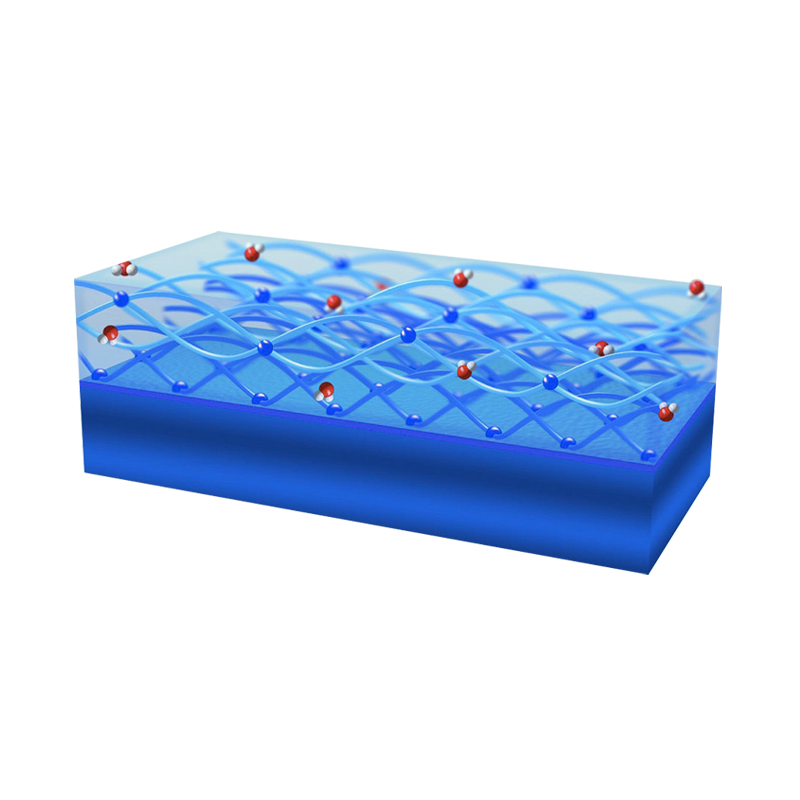
A medical device antithrombogenic coating is a functional coating system applied to the surface of a medical device, primarily engineered for devices that operate in a blood-contact environment. Unlike industrial coatings used merely to improve appearance or provide general protection, medical device surface coatings are generally developed and validated in line with the specific material, use environment, and performance objectives of the device.
For blood-contacting medical devices, the structural design of the device body is certainly important, but the surface is equally critical. Once a medical device enters the human body, its surface is directly exposed to a complex bodily-fluid and blood environment. For this reason, R&D teams often need to consider the relationship among material, structure, and surface function from a holistic standpoint during product design.
Antithrombogenic coating is not a single, fixed product category; it encompasses different material systems and technology routes. Different coatings may use different active ingredients and may bond to the device surface in different ways. In practice, therefore, medical device companies should select a coating based on device type and performance objectives, rather than making a simple judgment solely from a label such as “anticoagulant” or “antithrombogenic.”
The overall performance of a medical device is rarely determined by any single factor. Even a device with a sound structural design still requires consideration of how its materials and surface will perform in the actual use environment.
For blood-contacting devices, the device surface is the key interface that directly contacts the external environment. Different materials can exhibit different surface characteristics, and these characteristics can in turn be affected by processing, storage, sterilization, the use environment, and many other factors. As a result, medical device companies are increasingly using surface engineering to further optimize their products.
From an engineering-development perspective, a surface coating should be regarded as part of the device’s material system, rather than as a standalone material simply attached to the outside of the product. The coating must form a stable bond with the device substrate while also meeting the specified performance requirements.
This means that a complete antithrombogenic coating project generally needs to consider all of the following at the same time:
· Substrate type of the medical device
· Structural characteristics of the device
· Mode of blood contact
· Use environment
· Coating thickness
· Coating bonding method
· Coating durability
· Subsequent processing and production methods
These factors together determine the final coating solution.
Different antithrombogenic coatings use different material systems, so no single principle can describe all products.
For medical device R&D, understanding how a coating works means looking beyond just “what the active ingredient is”; the entire coating system must be understood. A change at any point can affect the final result.
Accordingly, when developing an antithrombogenic coating project, medical device companies should avoid evaluating the product from a single material parameter alone and should instead assess it at the level of the whole product system.
Looking at the evolution of medical device surface technology, different companies may adopt different material systems and technology routes.
At jMedtech, for example, the main anticoagulant-related product solutions fall into the following two categories.
Heparin anticoagulant coatings are an important route within anticoagulant surface technology for medical devices.
jMedtech’s Hygea® uses heparin as its active ingredient and adopts a covalent bonding method. The product supports UV-cure or thermal-cure processes and is characterized by strong adhesion and long-lasting anticoagulant performance.
For a specific project, whether to choose a heparin-based coating needs to be judged against the device’s design requirements.
The R&D team typically needs to confirm further:
· Whether the device is a blood-contacting product
· What the blood-contact mode is
· What the device’s service period is
· What the substrate material is
· What the core surface-function requirements of the product are
· How the final production process will be designed
These factors together determine the technology route.
jMedtech’s jHemo PC® uses a phosphorylcholine polymer.
Its performance characteristics include:
· Drug-free
· Anti-adhesion
· Reduced clotting
It also uses covalent bonding, with a coating thickness at the nanometer scale.
For medical device companies that require customized surface design, different material systems mean different development paths.
Therefore, when choosing a phosphorylcholine coating, the product must likewise be assessed together with the specific device rather than purchased based on the product name alone.
First, clarify what type of device it is.
For example:
· Cardiovascular intervention
· Neurovascular intervention
· Peripheral intervention
· Vascular-related devices
· Catheter-type devices
· Other blood-contacting devices
Different application fields place different emphasis on device performance.
For this reason, coating development must be grounded in the specific use scenario.
Medical devices may be made from a wide range of materials.
Different materials have different surface conditions, which can impose different requirements on coating bonding methods and formulation matching.
A single device may not even be constructed from a single material.
A complex catheter may be assembled from multiple materials, and surface stability may differ from one material to another.
Different medical device projects can have different core requirements.
For example:
· Anticoagulation
· Anti-adhesion
A single project may involve multiple objectives at the same time.
It is therefore necessary to clarify which performance metrics are the most critical.
For an antithrombogenic project, a further decision is needed: whether to adopt a heparin-based route, a phosphorylcholine-based route, or to develop another customized solution according to the actual product requirements.
For precision medical devices, coating thickness is an issue that cannot be overlooked.
For small-size catheters, guidewires, and other miniature devices in particular, an additional material layer may affect the product’s dimensions.
A good coating solution therefore usually needs to strike a balance between functionality and dimensional control.
That said, the final coating thickness for a specific project should still be based on actual product development and validation results.
A medical device coating cannot simply be “applied” and left at that.
During actual use, the coating must maintain the corresponding stability.
Accordingly, the bonding method between the coating and the device surface is extremely important.
An important characteristic of the medical device industry is this:
There are substantial differences between products.
Even if two products are both catheters, they may use completely different materials, structures, and processing techniques.
For this reason, while standardized coating products can provide a baseline technology route, complex projects generally still require customized development.
When selecting a supplier, price should not be the only point of comparison.
It is more advisable to evaluate suppliers across the following dimensions.
A coating company needs to understand the surface characteristics of different substrates.
Complex medical devices, in particular, may incorporate multiple materials at the same time.
Different devices may require different solutions.
jMedtech publicly offers two technology routes—heparin anticoagulant coatings and phosphorylcholine coatings—while also providing customized medical coatings.
A coating project needs to be verified through appropriate testing.
jMedtech publicly provides friction-force and push-force testing equipment.
Success with laboratory samples does not equal success in mass production.
The supplier needs the capability to take a product from prototyping through automated production.
Complex medical device projects generally require long-term technical collaboration.
It is therefore very important that the supplier be able to develop materials and processes according to project needs.
jMedtech’s current anticoagulant-related product portfolio includes:
· Hygea® Heparin Anticoagulant Coating
· jHemo PC® Phosphorylcholine Anticoagulant Coating
jMedtech also maintains a hydrophilic coating product portfolio.
For medical device projects that must simultaneously consider lubricity, blood-contact performance, and the adaptation of complex materials, this multi-route layout offers greater flexibility in matching the project.
Medical device antithrombogenic coatings are an important component of surface technology for blood-contacting medical devices.
In practice, however, an antithrombogenic coating is not a product that can be selected independently of the device itself. The device’s material, structure, use scenario, and performance objectives all influence the final technology route.
For medical device R&D companies, a more logical development approach is:
Understand the device → analyze the substrate → define performance objectives → select the technology route → sample validation → process optimization → ramp to mass production
jMedtech currently publicly offers two anticoagulant-related solutions—the Hygea® heparin anticoagulant coating and the jHemo PC® phosphorylcholine coating—and, through medical coatings, testing equipment, and automation equipment, has built a support system spanning from material development all the way to scaled production.
For any specific medical device project, the final coating solution should still be subject to technical evaluation and validation based on the actual product, rather than simply applying the test results of another device.
A medical device antithrombogenic coating is a functional coating system applied to the surface of a blood-contacting medical device, mainly used to improve the performance of the device’s blood-contact interface. Different products use different materials and technology routes, so the specific performance must be assessed in combination with the actual device.
The two use different material systems.
Hygea® uses heparin as its active ingredient, while jHemo PC® uses a phosphorylcholine polymer. Both jMedtech products use a covalent bonding method with nanometer-scale coating thickness, but their technology routes and performance characteristics differ, so they can be selected according to the actual device application.
It cannot be understood that simply.
Different medical devices have different materials, structures, usage patterns, and performance objectives, so project-specific technical evaluation is required.
The two focus on different core functions.
A hydrophilic coating generally focuses more on the lubricity and friction performance of the device surface, while an antithrombogenic coating primarily addresses surface-function needs in a blood-contact environment.
In some complex medical device projects, the final solution may need to take multiple surface properties into account together.
You first need to clarify the medical device’s:
· Application scenario
· Substrate
· Blood-contact mode
· Performance objectives
· Product design requirements
Then evaluate the suitable technology route for the specific project.
Contact our technical experts to discuss your project or request a sample.