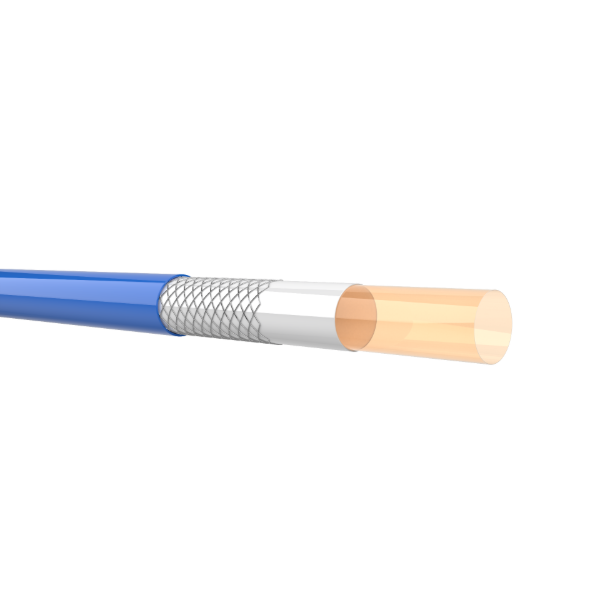
In minimally invasive interventional procedures, devices such as catheters and guidewires must navigate through the human vascular system for hours or even longer. The friction characteristics of the device surface directly determine procedural safety and success. Excessively high friction can cause intimal injury, thrombus formation, and even difficult device advancement or procedural failure; conversely, excessively low friction may lead to insufficient controllability in certain scenarios.
Therefore, precise testing and control of the friction performance of device surface coatings is an essential prerequisite for ensuring clinical safety.
Friction testing plays a key role in the quality control of medical device coatings:
1. R&D stage: Verifying the feasibility of coating formulations and process solutions.
2. Incoming inspection: Confirming the performance consistency of raw materials.
3. Process control: Monitoring quality fluctuations during production.
4. Finished product inspection: Ensuring products meet design specifications.
5. Stability studies: Evaluating performance retention over the product's shelf life.
The Coefficient of Friction (COF) is a dimensionless parameter measuring the frictional resistance between two contacting surfaces, defined as the ratio of frictional force to normal force:
μ = F / N
where μ is the coefficient of friction, F is the frictional force, and N is the normal force. In the medical device coating field, a lower COF generally indicates better surface lubricity.
For hydrophilic coatings, the COF of various substrates can be reduced by over 98% after coating. Taking jMedtech's jAqua® UV-curable hydrophilic coating as an example, the COF of treated surfaces can be reduced to an extremely low level, greatly improving device navigability through blood vessels.
A typical testing procedure includes:
Fix the coated sample on the test platform.
Activate the sample in a simulated body fluid environment (typically 37°C saline solution).
Use a standard probe to slide along the sample surface at a preset speed and pressure.
Record the friction force variation curve.
Calculate the average coefficient of friction.
Medical friction testing equipment consists of the following core components:
· High-precision force sensor: Measures friction force in real time.
· Precision motion control system: Controls probe movement speed and stroke.
· Environmental simulation system: Simulates in vivo temperature and fluid conditions.
· Data acquisition and analysis system: Collects and processes test data in real time.
Professional friction testing equipment should feature a broad force measurement range and high-precision measurement capability. Taking jMedtech's friction testing equipment as an example:
· Force measurement range: 0–2000 g (0–20 N), covering testing needs from ultra-low to moderate friction.
· Module stroke: 0–700 mm, with customizable longer strokes to meet special sample requirements.
· High-precision controller drive: Ensures accuracy and repeatability of force measurement.
During testing, the probe movement speed directly affects test results. High-end friction testing equipment provides multi-segment variable speed functionality:
· Five-segment lifting speed control: Ensures coating uniformity.
Modern friction testing equipment is equipped with intelligent data processing systems:
· Real-time curve display: Displays the friction force-displacement curve in real time during testing.
· Automatic calculation: Automatically calculates key indicators such as average COF and peak friction force.
· Automated report generation: One-click generation of standardized test reports including test conditions, raw data, and analysis results.
· Data storage and traceability: Complete test data storage with support for historical queries and batch comparison.
Advanced friction testing equipment can be integrated into automated production lines for online 100% inspection:
· Synchronized with automated coating systems.
· 100% online inspection.
· Automatic anomaly alarm and sorting.
Hydrophilic coating is one of the most common surface modification methods for medical devices. Taking jMedtech's jAqua® UV-curable hydrophilic coating as an example, its friction performance testing requires attention to:
Wet-state COF: The friction coefficient level after coating activation.
Friction durability: Changes in COF after repeated friction cycles (e.g., performance after 25 friction test cycles).
Lubrication uniformity: Consistency of COF across different sections.
In large-scale production, friction testing equipment is the core tool for inter-batch consistency monitoring:
· Incoming inspection: Confirming performance consistency of each batch of coating solution.
· In-process sampling: Monitoring process stability during production.
· Outgoing inspection: Ensuring delivered products meet specification requirements.
By establishing Control Charts for COF, process shifts can be detected in a timely manner and corrective actions taken.
During new product development, friction testing equipment also plays an important role:
· Formulation screening: Rapidly evaluating the friction performance of different coating formulations.
· Process optimization: Determining optimal curing conditions (time, temperature, energy, etc.).
· Substrate compatibility: Verifying coating performance on different substrates.
· Accelerated aging studies: Predicting performance retention over the product shelf life.
When selecting friction testing equipment, the following parameters should be carefully evaluated:
Parameter | Recommended Range | Description |
Force measurement range | 0–2000 g | Covers most medical device coating testing needs |
Force accuracy | ≤ ±0.5% FS | Ensures data accuracy |
Stroke range | ≥ 500 mm | Meets most catheter testing requirements |
Speed range | 0.1–500 mm/min | Meets different standard requirements |
Speed accuracy | ≤ ±1% | Ensures consistency of test conditions |
Data sampling rate | ≥ 100 Hz | Captures details of friction force variation |
Select the appropriate automation level based on production scale and inspection requirements:
Integrated Ring Coating Line
· Multiple independent modules, freely configurable for automated mass production.
· Nearly 1,000 units per hour.
· Anti-tangling design unique to the curing process.
· Automatic detection of whether the product enters the solution tube device.
Continuous Guidewire Coating Line
· Automated and labor-saving: Only 1 operator needed for the entire process; no operation required after startup.
· Space-saving with fewer restrictions: Coating in full reels; single guidewire length is not limited, solving multi-specification production challenges.
· Full-process continuity: Matches upstream and downstream production processes for continuous manufacturing.
Automated Guidewire Coating Production Line
· Multi-station continuous automation, saving labor.
· Equipped with double-sided UV lamp irradiation for rapid curing.
· 500% throughput increase compared to single-station systems.
· Compatible with various production management systems, helping optimize production workflows.
· Higher product consistency.
Ensure the selected equipment meets the following standard requirements:
· YY/T 1898-2024 (Chinese hydrophilic coating standard).
· ASTM F2349 (international standard).
· Customer-specific internal standards.
When evaluating equipment suppliers, consider the following:
Industry experience: Whether they focus on medical device testing equipment.
Technical support: Whether they can provide test method development and method validation support.
After-sales service: Timeliness of calibration, maintenance, and training.
Upgrade capability: Whether the equipment supports software and hardware upgrades.
User reputation: Feedback from existing customers.
Friction testing equipment is an indispensable core tool in the quality control system for medical device coatings. From new product R&D to large-scale production, from process monitoring to outgoing inspection, precise friction test data provides a reliable quantitative basis for product quality.
jMedtech's friction testing equipment features a broad force measurement range (0–2000 g), large stroke (0–700 mm, customizable), and automated test report generation, helping medical device companies establish an efficient and reliable coating quality control system to ensure product safety and efficacy in clinical applications.
The acceptable COF standard depends on the specific product type and application scenario:
· Hydrophilic-coated guiding catheters: Wet-state COF typically required to be < 0.1 (specific value depends on enterprise standards).
· Hydrophilic-coated guidewires: COF typically required to be reduced to an extremely low level (e.g., below 0.03).
· General criterion: A COF reduction of over 90% compared to the uncoated substrate is considered effective.
It is recommended to determine the specific acceptance threshold based on the clinical use requirements of the final product and applicable industry standards.
Testing time depends on the test method and number of samples:
· Single test: Typically 3–10 minutes (including sample preparation and activation time).
· Batch sampling: Usually 30 minutes to several hours, depending on the AQL sampling plan.
· Full-process validation: Systematic validation with multiple samples may take 1–2 business days.
Recommended calibration frequency:
· Routine calibration: Zero-point calibration with standard weights before each use.
· Periodic calibration: A comprehensive calibration every 12 months is recommended.
· Special circumstances: Recalibration required after equipment relocation or repair.
· Metrological traceability: Ensure calibration is traceable to national or international standards.
Key measures to improve test repeatability:
Environmental control: Maintain a constant-temperature, constant-humidity testing environment.
Standardized sample preparation: Unify coating process, activation time, and methods.
Test fluid management: Use freshly prepared simulated body fluid with controlled temperature.
Eqipment maintenance: Regularly calibrate sensors and keep probes clean.
Operating procedures: Develop detailed SOPs and train operators.
Statistical process control: Use control charts to monitor testing process stability.
Contact our technical experts to discuss your project or request a sample.