The selection of catheter liner material is a crucial factor in the success or failure of a medical device project. Modern minimally invasive surgery can now access increasingly complex anatomical areas of the human body, including nerves, blood vessels, cardiac chambers, and peripheral blood vessels, significantly increasing market demands for the overall performance of catheters. The choice between PTFE (polytetrafluoroethylene) liner and traditional catheter liner materials directly determines the device's performance, manufacturing complexity, and actual clinical efficacy.
PTFE is a fluoropolymer with carbon atoms surrounded by four fluorine atoms. This structure gives it one of the lowest surface energies of any known material. Translation: almost nothing sticks to it, and things slide against it with minimal resistance.
Two manufacturing processes dominate PTFE liner production:
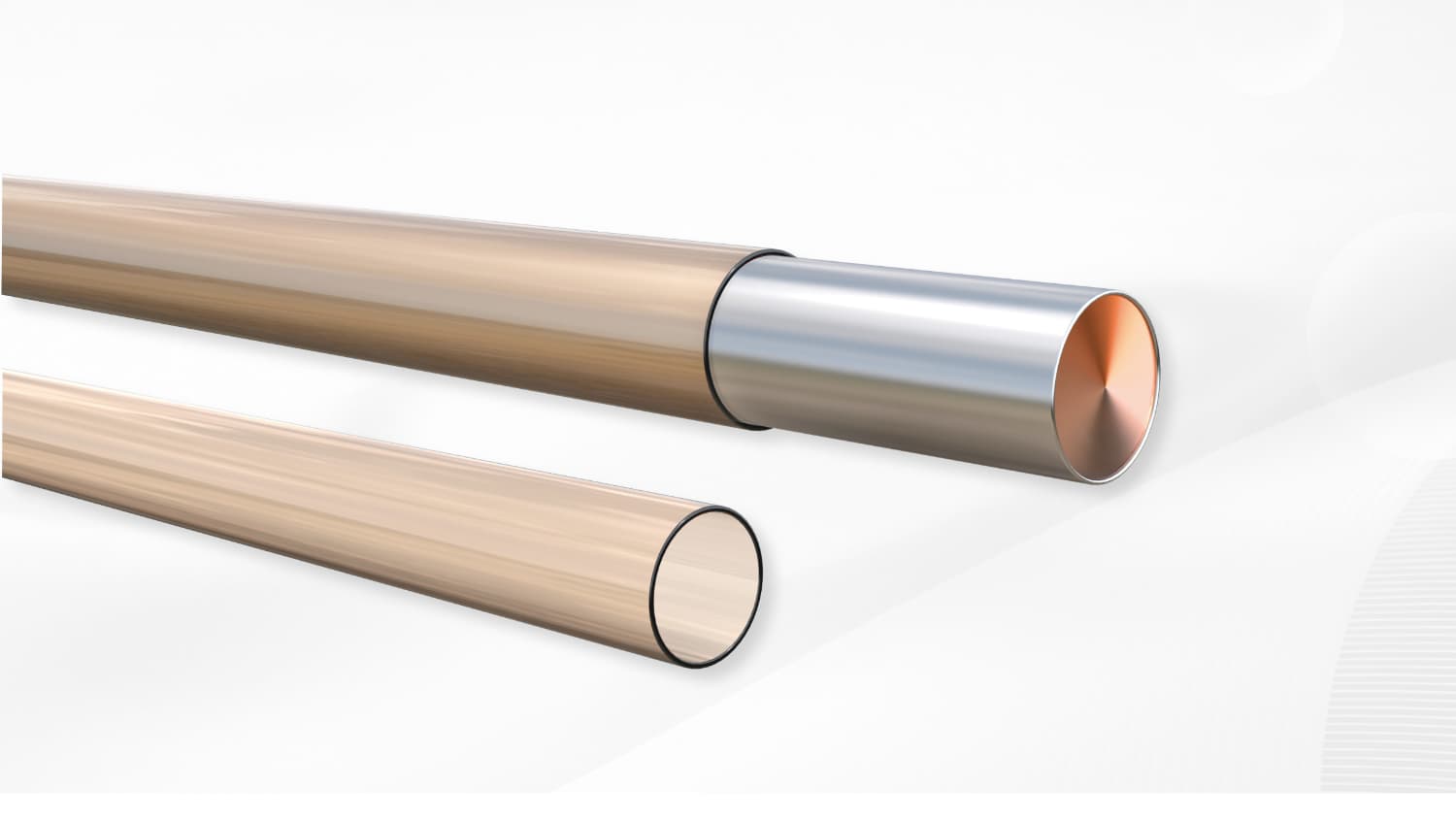
Paste extrusion (ram extrusion) blends PTFE powder with a lubricant, shapes it under pressure, then sinters it at high temperatures. This creates MatrixLiner®—jMedtech's flagship product—with wall thicknesses from 0.0005" to 0.010" (12.7 μm to 254 μm). The process induces a fibril structure, giving the material high axial strength. It resists longitudinal splitting during assembly and use. Useful.
Compression molding or cast extrusion produces MorphoLiner™. No extensive axial drawing, so the molecular structure stays isotropic. This means it conforms to complex geometries without the directional stiffness of paste-extruded material. Wall thicknesses start at 0.0003" (7.6 μm) with tolerances of ±0.0003" (±7.6 μm). Yes, that's thinner than a human red blood cell. It opens design spaces that conventional extrusion simply can't reach.
FEP is PTFE's chemical cousin. Fluoropolymer, good chemical resistance, decent lubricity. The key difference: FEP melts at lower temperatures, so manufacturing is simpler and tooling costs drop. Friction runs slightly higher than PTFE, and you can't get walls as thin economically. Mid-range devices, cost-sensitive applications—that's FEP's sweet spot.
Nylon (typically nylon 11 or 12) brings toughness and flexibility. Bonding is straightforward—thermal and adhesive methods work without special treatment. The problem? Nylon absorbs moisture (up to 2–3% equilibrium moisture content). Humid environments or steam sterilization cause dimensional drift. Friction is substantially higher than fluoropolymers. Not ideal when you're navigating tight lesions.
Polyimide is a thermoset polymer with impressive tensile strength and thermal stability. Walls as thin as 0.00025" are possible. But bonding polyimide is notoriously painful—plasma treatment or mechanical scoring required. Stiffness makes it prone to kinking. Niche applications: electrophysiology mapping catheters where pushability trumps everything.
Pebax (polyether block amide) blends polyamide hard blocks with polyether soft blocks. The result: formulatable across a wide durometer range—from very flexible (Pebax 2533) to relatively stiff (Pebax 7233). Extrudes easily, bonds well. Downside? High friction, poor chemical resistance versus fluoropolymers. Rarely the right choice as a primary liner in high-lubricity applications.
Let's talk friction. It's the first thing your sales team will brag about, but it's also genuinely clinically critical.
Lubricity determines how well a catheter tracks over guidewires, navigates bifurcations, and transmits forces from the operator's hands to the tip. In procedures where every minute affects patient outcomes and healthcare costs, friction isn't a secondary consideration.
The standard metric: coefficient of friction (COF), measured per ASTM D1894 on polished stainless steel (simulating guidewire surfaces).
Material | Coefficient of Friction (COF) | Classification |
PTFE (w/ Si oil lubricant) | 0.04–0.10 | Ultra-low friction |
FEP | 0.05–0.10 | Very low friction |
PTFE (unfilled) | 0.08–0.12 | Low friction |
Nylon 12 | 0.25–0.35 | Moderate friction |
Polyimide | 0.30–0.40 | High friction |
Pebax (75D) | 0.35–0.45 | High friction |
PTFE's 0.04–0.10 range puts it in a different performance tier entirely. For context: PTFE against steel is like ice sliding on ice. Pebax and high-durometer nylon? Four to eight times higher friction. That's not a marginal difference—it shows up as measurable deployment force increases and operator fatigue during longer procedures.
Clinical implications cut across multiple dimensions.
In coronary work, every gram of force saved during navigation translates to better trackability through calcified or tortuous segments. Operators regularly cross 2–4 vessel bifurcations before reaching the target lesion. At each transition, friction accumulates. High-friction liner can mean the difference between successful delivery and procedural abandonment.
Therapeutic delivery benefits too. Embolic agents, drug-eluting particles, thrombectomy devices—they all need consistent, predictable flow. High-friction liners cause uneven distribution, device hang-up at transitions, unpredictable dosing. Not good.
Friction matters, but it's one dimension. Mechanical properties—flexibility, kink resistance, pushability, trackability, wall thickness capability—collectively determine if your catheter survives clinical use.
Catheter flexibility depends on material modulus and wall geometry.
PTFE has an unusual mechanical character: relatively low tensile modulus (~0.5 GPa) but high elongation at break 。 It deforms substantially without fracturing. In bending, PTFE liners accommodate tight radii without cracking or delaminating.
Kink resistance matters most for small-diameter liners in neurovascular and peripheral work. Beyond the minimum bend radius, the lumen collapses. For PTFE, performance depends heavily on wall thickness and whether the material is anisotropic (MatrixLiner®) or isotropic (MorphoLiner™). Thicker MatrixLiner® resists kinking through structural rigidity—but trades flexibility. MorphoLiner™'s ultra-thin isotropic construction sacrifices column strength but conforms readily to complex bends. Different tools for different jobs.
Traditional materials? Pebax offers the widest flexibility range—Shore D 25–40 up to Shore D 70+. Designers can grade flexibility along the catheter shaft. Nylon bends well but takes permanent set when kinked; PTFE typically recovers lumen geometry after overbending. Polyimide? Highest tensile strength, but brittle. Kinks sharply.
This is one of catheter design's most complex trade-offs, and liner material plays a central role.
Pushability: how efficiently axial force transmits from proximal hub to distal tip. Critical for crossing resistant lesions or navigating long vascular segments.
Trackability: how readily the catheter follows the guidewire through tortuous paths without prolapsing or bunching.
Here's the thing about PTFE liners: they're ultra-thin and low-friction, so they primarily serve trackability. They don't add significant column stiffness. For pushability, you rely on outer shaft layers—braided or co-extruded composites. This architectural separation is actually elegant: you optimize the liner for lubricity while engineering the shaft independently for mechanical performance.
Traditional materials like polyimide and nylon often serve dual roles—structural element plus lubricious surface. Simpler manufacturing, but it constrains optimization. FEP sits in the middle: reasonable lubricity, enough structural integrity to contribute modestly to pushability in thinner configurations.
Wall thickness enables device miniaturization—the relentless push toward smaller profile catheters accessing increasingly distal vasculature.
Material | Minimum Wall Thickness | Typical Tolerance | Manufacturing Method |
PTFE – MorphoLiner™ (jMedtech) | 0.0003" (7.6 μm) | ±0.0003" | Compression molding/casting |
PTFE – MatrixLiner® (jMedtech) | 0.0005" (12.7 μm) | ±0.0003" | Paste extrusion |
Polyimide | 0.00025" (6.35 μm) | ±0.0001" | Continuous wrapping + cure |
FEP | 0.001" (25.4 μm) | ±0.0005" | Melt extrusion |
Nylon 12 | 0.002" (50.8 μm) | ±0.0005" | Melt extrusion |
Pebax | 0.002" (50.8 μm) | ±0.0005" | Melt extrusion |
MatrixLiner® targets higher-wall applications (0.0005"–0.010") where anisotropic fibril structure provides superior axial strength. Together, the two lines cover virtually the entire range of interventional device requirements.
Medical devices face harsh environments: blood's ionic and protein-rich milieu, aggressive sterilization processes, potentially aggressive therapeutic agents. The liner's chemical and thermal resilience determines device longevity, functional integrity, and regulatory compliance.
PTFE's carbon-fluorine molecular architecture delivers near-complete chemical inertness across the widest range of environments of any practical polymer. Strong acids (except hydrofluoric acid), bases, oxidizing agents, organic solvents—PTFE doesn't swell, degrade, or leach extractables.
This isn't theoretical. In drug-eluting applications, PTFE's stability ensures the liner doesn't interact with drug compounds or alter release kinetics. In ablative therapies with aggressive contrast media or sclerosing agents, PTFE maintains structural and lubricious integrity throughout the procedure.
FEP matches PTFE's chemical resistance, with slightly higher susceptibility to certain fluorinated solvents. Nylon and Pebax are polar thermoplastics—vulnerable to strong acids, bases, and organic solvents. Polyimide resists most environments but can be attacked by strong bases and high-temperature aqueous conditions.
Sterilization compatibility is non-negotiable. Here's the compatibility landscape:
Sterilization Method | PTFE | FEP | Nylon | Polyimide | Pebax |
EtO Gas | Excellent | Excellent | Good | Excellent | Good |
Steam Autoclave (121°C) | Excellent | Good | Fair (moisture sensitivity) | Excellent | Fair–Poor |
Steam Autoclave (134°C) | Excellent | Fair | Poor | Excellent | Poor |
Gamma Radiation (25–50 kGy) | Good | Good | Degrades | Good | Degrades |
E-beam | Good | Good | Degrades | Good | Degrades |
Vaporized Hydrogen Peroxide | Excellent | Excellent | Good | Excellent | Good |
PTFE's thermal stability range (-200°C to +260°C) comfortably handles all common sterilization modalities. Steam autoclave performance stands out—unlike nylon and Pebax, which absorb moisture and may suffer dimensional changes or property degradation, PTFE maintains mechanical and dimensional integrity through repeated autoclave cycles.
This makes PTFE-lined catheters suitable for reusable devices sterilized between procedures without liner performance compromise.
Moisture absorption is an underestimated source of dimensional instability. Hydrophilic materials swell when absorbing water, contract when desorbing. In multi-layer catheter constructions with precise interference or clearance fits, moisture-induced changes compromise layer adhesion, create focal stress points, or alter inner diameter tolerance critical for guidewire compatibility.
PTFE absorbs essentially no moisture (<0.01% equilibrium moisture content). Dimensionally stable across full environmental humidity ranges in manufacturing, storage, and clinical use. Critical for maintaining precise inner diameter control throughout device lifecycle.
Nylon 12 absorbs 0.6–1.0% moisture at equilibrium. A nylon component manufactured in climate-controlled conditions can measurably swell in a warm, humid operating room, potentially altering critical fit tolerances. This moisture sensitivity is why nylon is often desiccated prior to assembly.
Biocompatibility isn't binary—it's a spectrum of responses: tissue reaction, hemocompatibility, genotoxicity, carcinogenicity. Each device-material combination must be characterized under specific use conditions.
For catheter liners, which contact blood and vessel intima during every procedure, the biocompatibility profile is a primary regulatory consideration.
USP Class VI testing and ISO 10993 biocompatibility standards form the foundational safety assessment framework. PTFE has an exceptionally documented history of safe use in implantable medical devices spanning over five decades—vascular grafts, surgical mesh, sutures, catheter components.
Blood-contacting devices must demonstrate hemocompatibility—particularly resistance to thrombosis (clot formation) and minimal hemolysis (red blood cell damage). PTFE's extremely low surface energy and smoothness contribute to favorable hemocompatibility profiles. The material's chemical inertness minimizes leachable substances that could trigger coagulation cascades.
Alternative materials present varied hemocompatibility profiles. Polyimide's surface energy is higher, potentially promoting more platelet adhesion. Nylon's moisture absorption can alter surface characteristics over time. FEP approaches PTFE's hemocompatibility but with slightly higher thrombogenic potential in some configurations.
Device manipulation generates particulates—small material fragments that can embolize distally. For neurovascular applications, even microscopic particles can cause devastating strokes. PTFE's high elongation at break and cohesive failure mode means it generates fewer and smaller particles under mechanical stress compared to more brittle materials like polyimide.
In our experience testing various liner materials under simulated deployment conditions, PTFE consistently produces the lowest particulate loads. This matters most in intracranial applications where vessel diameters leave no margin for error.
PTFE's low surface energy—its greatest strength for lubricity—becomes a challenge when bonding to outer catheter layers. Engineers must address this directly.
Chemical etching uses sodium-based solutions (typically sodium naphthalenide) to attack the PTFE surface, removing fluorine atoms and introducing oxygen-containing functional groups. This raises surface energy dramatically—from ~18 dynes/cm for untreated PTFE to >50 dynes/cm after etching—and creates a microscopically rough surface for mechanical interlock.
Beyond chemical etching, tie-layer technology offers an alternative or complementary bonding strategy. A tie layer is a thin thermoplastic elastomer film—often modified Pebax or polyurethane—extruded or fused onto the PTFE liner's outer surface. The tie layer's outer surface bonds readily to the catheter's outer jacket material; its inner surface fusion-bonds to PTFE through heat and pressure during lamination.
Tie-layer approach is particularly valuable for ultra-thin wall constructions where etched surface alone may not provide sufficient bonding area. By building a continuous thermoplastic interface, stress distributes across the entire surface rather than concentrating at discrete joints.
Modern high-performance catheters employ 4–6 layer constructions, each serving a specific function. A typical neurovascular micro-catheter might feature:
1. Inner liner (0.0005"–0.001" PTFE, etched or tie-layer coated) — lubricious blood-contacting surface
2. First structural layer (braided stainless steel or nitinol wire, 0.002"–0.004" composite thickness) — torque transmission and kink resistance
3. Second structural layer (coiled ribbon, optional) — flex fatigue resistance and variable stiffness zones
4. Outer jacket (Pebax or nylon, 0.003"–0.010" wall) — mechanical protection, radiopaque filler integration, surface finish
Delamination risk escalates with each layer. Failure at any interface can propagate during use, compromising entire assembly structural integrity.
General performance data is necessary but insufficient. The optimal liner choice depends on specific therapeutic application, anatomical target, required device dimensions, and clinical procedure characteristics.
Let's be honest—neurovascular intervention is where PTFE liners aren't just preferred, they're essentially mandatory.
Cerebrovascular anatomy imposes extreme constraints: vessel diameters from 2 mm down to 0.5 mm in M2–M4 segments, access angles at bifurcations often exceeding 90 degrees, consequences of vessel injury catastrophic. Every fraction of a millimeter of profile, every milligram of friction force, every increment of stiffness determines procedural success versus hemorrhagic or ischemic complications.
PTFE dominates neurovascular micro-catheters for compelling reasons:
• Ultra-low friction enables navigation through the tightest vessel diameters without excessive force transmission to vessel walls.
• Exceptional flexibility at ultra-thin wall gauges lets the catheter conform to intracranial vasculature's natural curvature.
• Chemical inertness ensures compatibility with cerebral blood's ionic, protein-rich environment, minimizing thrombotic complications.
• Minimal particulate generation reduces embolic risk from intra-procedural manipulation.
Cardiovascular procedures—diagnostic angiography, PCI devices, transcatheter aortic valve delivery systems—operate in demanding but generally less tortuous environments than neurovascular anatomy. The coronary tree, while highly branched and occasionally calcified, presents fewer extreme geometry challenges. This creates design optimization opportunities, trading some PTFE lubricity against enhanced pushability and torque response.
Peripheral vascular interventions—targeting leg, kidney, and extremity vessels—and urological procedures operate in larger-diameter structures where extreme miniaturization and friction performance matter less. In these applications, Pebax, nylon, and FEP's cost-effectiveness often makes them preferred.
Peripheral angioplasty balloons and self-expanding stent delivery systems frequently combine Pebax or nylon outer jackets with FEP or PTFE liners, capturing lubricity benefits at more accessible price points. Urological catheters—ureteral stents, nephrostomy tubes, Foley catheters—are almost universally silicone, latex, or polyurethane, sized for urethral and ureteral lumens (2–7 mm diameters) where friction isn't the primary driver.
Here, PTFE liner might be reserved for distal tip sections—a short segment navigating tight anatomical transitions—while the remainder uses less expensive material. This graduated strategy, enabled by jMedtech's flexible manufacturing, pragmatically balances performance against cost.
Electrophysiology (EP) catheters represent a distinct category where polyimide has historically dominated. EP catheters—mapping and ablation of cardiac arrhythmias—feature extreme miniaturization (2–3 French distal shafts, 0.67–1.0 mm), high pushability requirements for transseptal access, and multiple electrodes and signal wires in confined cross-sections.
Polyimide's ability to achieve wall thicknesses as low as 0.00025" provides a dimensional advantage PTFE historically couldn't match. But jMedtech's MorphoLiner™ changes this calculus. With minimum wall of 0.0003" (7.6 μm) and ±0.0003" tolerance, MorphoLiner™ approaches polyimide's thinness while delivering PTFE's superior lubricity, biocompatibility, and surface smoothness. For EP applications requiring highest electrode density and signal fidelity at the catheter tip, MorphoLiner™ inner tube with polyimide braid support structure offers a compelling hybrid—maximizing both miniaturization and trackability.
Performance can't be evaluated in isolation from cost and manufacturing complexity. Raw material costs, processing capital investment, yield rates, regulatory compliance burden, supply chain risk—these collectively drive material and supplier selection.
Manufacturing processes differ fundamentally, with direct cost implications.
Paste extrusion (MatrixLiner®) is multi-stage: powder blending, lubricant addition, extrusion, drying, high-temperature sintering. Significant energy consumption. But paste extrusion enables the unique combination of ultra-thin walls, high precision tolerances, and anisotropic mechanical properties defining PTFE's advantages. Capital intensity is relatively high, but well-characterized processes achieve excellent yields.
Melt extrusion (FEP, nylon, Pebax) converts polymer pellets directly into tubing through a heated die. Faster, lower-temperature, less specialized equipment, shorter cycle times, more amenable to rapid development and scale-up. Trade-off: limited minimum wall thickness—economically impractical below ~0.001" for most materials—and inability to match PTFE's ultra-thin wall + high axial strength combination.
Yield—the proportion meeting all dimensional and quality specifications—critically determines true manufacturing cost. An apparently inexpensive material per-kilogram may prove costly with high rejection rates or extensive rework.
PTFE liner manufacturing, while capital-intensive, benefits from excellent process stability once parameters are established. The sintering process is self-limiting—fully coalesced polymer doesn't degrade with further exposure—reducing sensitivity to minor temperature and timing variations. jMedtech's ISO 13485-certified quality management implements 100% in-process inspection at critical dimensions, with automated optical and laser gauging providing real-time feedback.
Thermoplastic melt extrusion offers simpler equipment but faces distinct yield challenges: wall thickness variation from die swell, lot-to-lot polymer viscosity variation, moisture-induced defects. For high-specification medical applications, these challenges erode apparent cost advantages when yield losses and inspection overhead factor in.
Comprehensive total cost of ownership (TCO) analysis must account for:
• Raw material cost (per unit length of finished liner)
• Tooling and capital amortization
• Processing time and energy consumption
• Yield and rework rate
• Inspection and quality assurance costs
• Surface treatment costs (etching, tie-layer application)
• Regulatory documentation burden
• Supply chain risk and lead time
Fully accounted for, PTFE liners occupy a moderate-to-high cost position relative to commodity thermoplastics but offer the best value proposition when performance requirements justify use. PTFE liner cost premium is typically 2–5× versus nylon or Pebax equivalents, but this premium offsets in applications where PTFE's advantages translate into clinical differentiation, reduced procedural complications, or competitive positioning.
jMedtech is one of the few medical device CDMOs globally that simultaneously masters both paste extrusion (MatrixLiner®) and molding/casting (MorphoLiner™) processes for PTFE liners. It can achieve an industry-leading PTFE wall thickness of 0.0003" (7.6 μm) while maintaining a precision tolerance of ±0.0003" Its products boast a coefficient of friction as low as 0.04–0.08, only 1/4 to 1/8 that of traditional materials. It also supports both etching and tie-layer bonding methods, custom cross-sections in various shapes (circular/elliptical/crescent/star), and vertically integrated delivery from liner to multi-layer catheter co-extrusion. Leveraging a mature system with 3 ISO 13485 certified factories, 220,000 square feet of production capacity, and 600+ global customers, jMedtech enables catheter engineers to work seamlessly between ultra-thin walls, extremely low friction, multi-layered composite structures, and large-scale mass production.
The PTFE liner versus traditional tubing decision isn't a simple binary. It's a nuanced engineering trade-off evaluated through specific application requirements, performance priorities, and commercial constraints.
Advanced PTFE liner technologies are narrowing the traditional trade-off space. jMedtech's isotropic MorphoLiner™ with its 0.0003" minimum wall, plus etched and tie-layer options across both lines, extends PTFE's performance advantages into applications and form factors previously outside its reach.
For medical device engineers, R&D directors, and procurement managers seeking to differentiate their devices through superior clinical performance, the question is no longer whether PTFE is the right material. It's which PTFE liner solution can most effectively enable your device design vision while meeting quality, regulatory, and commercial requirements in a competitive global market.
What is the main advantage of PTFE liners over traditional catheter tubing materials?
If we had to pick one thing? Lubricity. PTFE gives you the lowest coefficient of friction available—0.04–0.10 versus 0.25–0.45 for alternatives like nylon or Pebax. That translates directly to better trackability and easier navigation through tortuous anatomy. Beyond that, you get chemical inertness, USP Class VI biocompatibility, and the ability to go ultra-thin (down to 0.0003" with MorphoLiner™). For neurovascular, cardiovascular, and other high-performance interventional applications, those properties add up.
How do I bond PTFE liner to Pebax or nylon outer catheter layers?
This is the #1 engineering challenge with PTFE. Two main approaches work:
First, chemical etching. Sodium-based treatments raise surface energy from ~18 to >50 dynes/cm, creating chemically active sites for adhesive bonding. jMedtech supplies etched liners with quality verification (contact angle, peel strength testing).
Second, tie-layer technology. Apply a thin thermoplastic layer (modified Pebax, typically) to the outer PTFE surface. This bonds readily to your outer jacket during lamination without adhesive. jMedtech offers both approaches—your choice depends on your outer jacket material and lamination process.
What is the difference between MatrixLiner® and MorphoLiner™?
Think of it this way: MatrixLiner® is anisotropic—fiber-oriented from paste extrusion. High axial strength, good for devices with significant tensile and compressive loading. Walls from 0.0005" to 0.010".
MorphoLiner™ is isotropic—no molecular orientation from compression molding/casting. Conforms better to complex geometries, can achieve thinner walls (starting at 0.0003"). Better for applications needing maximum flexibility and miniaturization. Different tools for different jobs.
Can PTFE liners be used in steam-sterilized reusable devices?
Yes, and they excel here. PTFE handles steam autoclave (121°C and 134°C) with essentially zero moisture absorption—no dimensional degradation, no property changes through repeated cycles. This matters for reusable interventional devices. Nylon and Pebax? They absorb moisture and degrade under repeated steam exposure. Not a viable option.
What is the typical cost premium for PTFE liners compared to Pebax or nylon tubing?
Roughly 2–5× per unit length, driven by more complex manufacturing (paste extrusion versus melt extrusion) and higher raw material costs. But look at total cost of ownership: reduced procedural complications, improved clinical outcomes, better manufacturing yields. In high-performance applications where PTFE's advantages translate to meaningful clinical differentiation, the premium often pays for itself.
Contact our technical experts to discuss your project or request a sample.