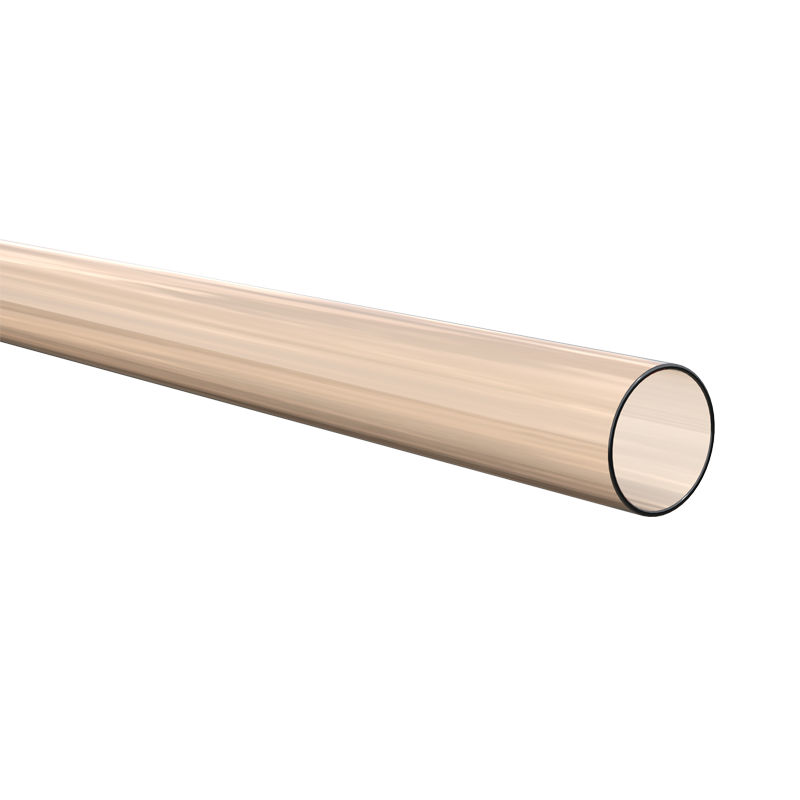
PTFE Liner is a low-friction precision channel on the inner wall of the catheter, which determines the smoothness of instrument delivery and the accuracy of the lumen.
When designing next-generation catheter systems, the inner lining material serves as the foundation upon which deliverability, trackability, and clinical performance depend. PTFE (polytetrafluoroethylene) liners have emerged as the gold standard for interventional device construction, offering unparalleled lubricity, chemical inertness, and mechanical versatility. Yet selecting the right PTFE liner requires navigating a complex landscape of wall thicknesses, tolerance specifications, etching requirements, and mechanical property trade-offs that can significantly impact final device performance.
As the innermost layer of multi-layer composite catheter constructions, PTFE liners determine how effectively clinicians can navigate tortuous vasculature, deliver therapeutic devices, and achieve precise procedural outcomes.
PTFE dominates catheter inner lining applications because it offers the lowest coefficient of friction of any polymer material currently available in medical device manufacturing. With a dynamic coefficient of friction ranging from 0.04 to 0.10 depending on surface conditions and testing methodology, PTFE reduces drag forces during device passage by 60-80% compared to conventional polymers such as polyimide or nylon. This lubricity translates directly into improved guidewire tracking, smoother device delivery, and reduced vascular trauma during navigation. The difference is real.
In the standard three-layer catheter architecture—inner PTFE liner, middle reinforcement layer (typically stainless steel braid or coils), and outer polymer jacket—PTFE serves as the critical interface between the mechanical reinforcement structure and the blood-contacting lumen. The low-friction inner surface enables rapid exchange of guidewires and catheters while the chemically inert PTFE matrix provides excellent hemocompatibility and prevents material degradation during long implantation procedures.
The exceptional chemical resistance of PTFE also protects the reinforcement layer from corrosion and environmental stress cracking that could compromise catheter structural integrity over time. This combination of tribological performance and chemical stability has established PTFE as the default choice for high-performance interventional devices ranging from coronary balloon catheters to complex neurovascular microcatheters.
Ultra-thin wall construction has become increasingly important as interventional procedures push toward smaller access sites . Reducing wall thickness from 0.001" to 0.0005" decreases total catheter outer diameter by approximately 0.001" per liner layer—translating to meaningful profile improvements in applications where 0.002-0.003" of size reduction determines clinical feasibility. Beyond profile benefits, thinner walls enhance flexibility and trackability through tortuous anatomy, reducing the force required to navigate sharp vessel bifurcations and calcified lesions.
The available wall thickness spectrum spans from approximately 0.0003" (7.62 μm) achieved through advanced film-casting processes to standard extruded products at 0.001" (25 μm) thickness. The most commonly specified range for interventional applications falls between 0.0005" (12 μm) and 0.001" (25 μm), representing a balance between mechanical robustness and profile optimization. Every micron counts.
Wall thickness decisions inevitably involve mechanical trade-offs. Increased wall thickness enhances pushability and torque response by providing greater column strength and torsional rigidity to the composite catheter structure. However, this comes at the cost of reduced flexibility and increased bending stiffness, potentially compromising navigation through challenging anatomy. The key design insight is that wall thickness effects are non-linear. Incremental reductions below 0.0005" yield disproportionate improvements in flexibility while having manageable impacts on pushability when combined with appropriate reinforcement designs. The engineering is nuanced.
Material processing method significantly influences achievable wall thickness and mechanical properties. Film-cast PTFE at 0.001" wall thickness demonstrates approximately 450% elongation at break with a modulus of 43,000 psi, while extruded PTFE of equivalent wall thickness shows approximately 390% elongation but significantly higher modulus of 130,000 psi. This data from Nordson MEDICAL technical documentation illustrates the fundamental choice between ductile (film-cast) and stiff (extruded) material responses that shapes catheter handling characteristics.
Dimensional precision in PTFE liner inner diameter directly determines compatibility with the guidewires, microcatheters, and therapeutic devices that must pass through the catheter lumen during clinical procedures. Tolerance specification therefore represents a critical quality parameter with immediate clinical implications.
Standard guidewire diameters used in interventional procedures include 0.014", 0.018", and 0.035" as primary sizes, with specialized applications requiring 0.009" microguidewires and 0.038" exchange-length wires. Each guidewire size requires an appropriate inner diameter clearance to enable smooth advancement while maintaining adequate guidance. Excessive clearance allows guidewire to piston within the lumen, degrading torque transmission and positional control. Insufficient clearance creates friction drag, potentially preventing device advancement in critical procedural moments.
Industry-leading tolerance specifications distinguish premium PTFE liner suppliers from commodity producers. Extruded PTFE liners typically achieve inner diameter tolerances of ±0.0005" (±12.7 μm), while precision film-cast processes can deliver tolerances as tight as ±0.0003" (±7.62 μm). The practical significance of this difference becomes apparent when considering that a 0.014" guidewire in a 0.016" inner diameter liner has only 0.001" radial clearance per side—barely four times the diameter of a red blood cell. Precision is non-negotiable.
Tighter inner diameter tolerances correlate directly with more consistent device passage forces throughout the catheter length. Variable clearance along the liner creates uneven friction that manifests as stiction events during device advancement, requiring clinicians to apply irregular force inputs that compromise precise positioning. For applications requiring sub-millimeter positioning accuracy—such as coil embolization of cerebral aneurysms or stent deployment in ostial lesions—liner ID consistency becomes a critical performance parameter. Consistency is key.
PTFE's renowned non-stick properties, which make it ideal for cookware and industrial applications, create a fundamental challenge in catheter manufacturing: the material cannot be bonded directly to outer jacket polymers without surface preparation. Understanding etching requirements and quality verification is essential for preventing clinical failures.
Sodium-naphthalene etching, developed in the 1960s and refined for medical device applications, removes fluorine atoms from the PTFE surface through a controlled chemical reaction that converts the fluorocarbon surface into a carbon-rich layer capable of forming mechanical and chemical bonds with subsequent materials. This surface activation enables adhesive bonding or thermal fusion of outer jacket materials to the PTFE liner, creating the integrated composite structure required for clinical catheters. Chemistry enables everything.
Etching quality assessment relies primarily on visual inspection and contact angle measurement. Properly etched PTFE exhibits a uniform brown-to-black coloration across the treated surface, with the color depth correlating with surface energy increase. Contact angle measurements against standard test liquids provide quantitative verification, with properly etched surfaces demonstrating contact angles below 60° compared to virgin PTFE values exceeding 100°. Surfaces exhibiting uneven coloration, lighter patches, or visible residue indicate incomplete or inconsistent etching that may compromise bond integrity. Quality control is essential.
Clinical consequences of inadequate etching manifest as liner delamination—separation of the inner PTFE layer from the outer jacket during device manipulation. Beyond immediate procedural complications, delaminated liner fragments represent potential embolic hazards requiring additional intervention and potentially causing permanent patient harm. Regulatory agencies and standards organizations consistently identify delamination as a critical failure mode requiring robust manufacturing controls and incoming material verification.
Etching specifications must address treatment location and extent. Full-length etching treats the entire liner surface, maximizing bond area but potentially affecting outer diameter surface properties. Selective etching masks specific zones to preserve surface characteristics in functional areas. ID-only or OD-only etching limits treatment to the relevant bonding interface, reducing process complexity while potentially limiting total bond strength. The choice depends on catheter construction, jacket material compatibility, and specific performance requirements. Process matters.
The mechanical performance envelope of PTFE liners encompasses three primary characteristics—pushability, torqueability, and flexibility—that collectively determine how effectively clinicians can navigate anatomy and deliver therapies. Optimizing these properties requires understanding their fundamental relationships and the material modifications available from specialized suppliers.
Pushability describes the ability to transmit longitudinal force from the proximal catheter hub to the distal tip, enabling advancement through resistant anatomy such as tight stenoses, calcified vessels, or acute vessel angles. Pushability depends primarily on column strength and bending stiffness, both of which increase with wall thickness and material modulus. High-pushability applications include chronic total occlusion (CTO) crossing devices and high-pressure stent delivery systems where substantial force must be transmitted without buckling or kinking. What this means for device developers: balance is essential.
Torqueability measures the rotational correspondence between proximal handle manipulation and distal tip orientation, critical for directional control during navigation and device positioning. Torsional rigidity in the PTFE liner contributes to overall catheter response, though the reinforcement layer typically dominates torque transmission characteristics. PTFE liner contributions become significant in thin-walled constructions where the reinforcement layer provides less torsional contribution.
Flexibility, or the ability to conform to vessel curvature without inducing straightening forces or kinking, represents a critical parameter for neurovascular, peripheral, and cardiac applications requiring navigation through tortuous anatomy. Flexibility requirements increase as target vessels become more distal and vessel diameters decrease. The flexibility-to-pushability ratio often defines the fundamental design challenge in catheter development—increasing one characteristic typically compromises the other. No easy answers exist.
Advanced PTFE liner product lines address these trade-offs through engineered material properties. ToughFlex™ technology delivers yield strength-to-elongation ratios exceeding 0.65, providing the high yield strength necessary for demanding push applications while maintaining adequate ductility for manufacturing processes. ElastiFlex™ formulations achieve elongation values of 800% or greater, enabling extreme flexibility for navigation through tight vessel curvatures without compromising structural integrity. Material science delivers.
Wall thickness and material property selection operate synergistically in determining final catheter performance. The classic engineering relationship between bending stiffness (∝ thickness³ × modulus) demonstrates that thickness reductions provide more dramatic stiffness improvements than modulus reductions, making ultra-thin wall constructions attractive for flexibility-critical applications when combined with appropriate reinforcement designs that compensate for reduced column strength.
Selecting the appropriate PTFE liner type requires matching manufacturing process capabilities with specific application requirements. The choice shapes device performance. The following table summarizes primary liner categories and their characteristic applications.
Type | Process | Typical Application |
Standard PTFE (extruded, W75/W100) | Free Extrusion | Guiding catheters, delivery systems |
Thin-Wall PTFE (extruded, W50) | Free Extrusion | Microcatheters, neurovascular devices |
PTFE Mini Tubing (film-cast, W30) | Film Cast | Neurointervention, ultra-low profile devices |
Multi-Lumen PTFE | Ram Extrusion | Specialized catheters (steerable, diagnostic) |
Standard PTFE liners produced through free extrusion processes offer the most economical option for high-volume applications where extreme profile reduction is not required. Wall thicknesses in the W75-W100 range (approximately 0.00075"-0.001") provide robust mechanical support suitable for guiding catheters, standard delivery systems, and intermediate catheters. Inner diameter tolerances typically achieve ±0.0005" in standard product grades, sufficient for most coronary and peripheral applications.
Thin-Wall PTFE liners in the W50 thickness range (approximately 0.0005") represent a significant capability advancement enabling profile reduction in microcatheter and specialty device construction. These extruded products maintain reasonable tolerances while reducing wall thickness by 50% compared to standard grades. Neurovascular applications requiring 1.5-2.0 French distal profiles particularly benefit from thin-wall constructions that enable more distal navigation while preserving adequate inner lumen for therapeutic device passage.
PTFE Mini Tubing produced through film-cast processes achieves the thinnest commercially available walls at 0.0003" (7.62 μm) while maintaining acceptable manufacturing tolerances. The film-casting process deposits PTFE in thin layers onto rotating mandrels, building wall thickness gradually and achieving superior uniformity compared to extrusion. Applications include ultra-low-profile neurointerventional devices, specialty microcatheters, and research-grade delivery systems where every micron of profile reduction translates to clinical advantage.
Multi-lumen PTFE tubing produced through ram extrusion enables complex catheter geometries with multiple internal channels in single-piece construction. Steerable catheters utilizing pull-wire mechanisms, diagnostic catheters requiring simultaneous pressure monitoring and agent delivery, and specialty devices with integrated components benefit from multi-lumen configurations. Inner diameters can be specified independently for each lumen while maintaining precise positional relationships between channels.
In applications requiring navigation through extremely tortuous anatomy—such as neurovascular procedures accessing the middle cerebral artery or anterior cerebral artery branches—the cumulative flexibility of all catheter layers determines whether successful navigation is possible. Adding even 0.001" of wall thickness to the inner liner can transform a navigable device into one that prolapses at vessel bifurcations or cannot track around critical bends. Every 0.001" matters.
The solution involves systematic thickness minimization throughout the catheter construction. Selecting ultra-thin wall PTFE liners (0.0003"-0.0005") reduces one source of stiffness, while working with suppliers capable of manufacturing thin-gauge reinforcement materials and jacket polymers compounds the benefit. Advanced braid designs using smaller diameter wires at higher pic counts can maintain equivalent hoop strength with reduced bending stiffness compared to conventional braid constructions. Optimization compounds benefits.
Inner diameter variation along the catheter length creates unpredictable device handling characteristics that confuse clinicians and potentially compromise procedural safety. When a 0.014" guidewire passes through regions of varying ID, the changing clearance produces irregular advancement resistance that may be misinterpreted as vessel resistance or anatomical obstacles.
Addressing tolerance instability requires supplier qualification based on statistical process capability data. Cpk values exceeding 1.33 indicate processes capable of maintaining tolerances within acceptable variation bands. Lot-to-lot consistency studies and incoming inspection protocols verify ongoing compliance. For critical applications, specifying premium tolerance grades with ±0.0003" tolerance ensures adequate clearance margin even when cumulative variation occurs.
The fundamental trade-off between flexibility and pushability challenges every catheter designer. Extremely flexible devices navigate anatomy beautifully but cannot transmit sufficient force for therapeutic device delivery. Stiff devices deliver devices effectively but cannot reach target locations in tortuous vessels. This challenge intensifies as target anatomy becomes more distal and complex.
Modern approaches address this paradox through graduated construction designs that vary mechanical properties along the catheter length. High-strength PTFE liners like ToughFlex™ materials can be used selectively in proximal shaft sections where pushability requirements dominate while flexible formulations serve distal sections requiring navigation capability. Variable pitch reinforcement braiding creates transition zones that progressively shift mechanical characteristics, mimicking the tapering architecture of anatomical vessels themselves.
A medical device company developing a next-generation neurovascular microcatheter faced stringent dimensional constraints for intracranial navigation. Target specifications required distal outer diameter below 2.0 French (0.67 mm) while maintaining adequate inner lumen for 0.014" guidewire compatibility and therapeutic device delivery. Previous prototype iterations using conventional PTFE liners achieved adequate profile but exhibited insufficient pushability for trans-circulation navigation and excessive friction during device advancement.
Engineering analysis identified wall thickness reduction as the primary pathway to profile optimization, with material property enhancement compensating for structural strength losses. The development team selected MorphoLiner™ W30 film-cast PTFE liner at 0.0003" (7.62 μm) wall thickness, achieving approximately 15% outer diameter reduction compared to prior prototypes using 0.0005" extruded liners. Simultaneously, ToughFlex™ high-yield-strength material formulation provided the mechanical compensation necessary to maintain adequate push transmission despite ultra-thin wall construction.
Manufacturing qualification confirmed that the selected liner achieved inner diameter tolerances of ±0.0003", ensuring consistent guidewire compatibility throughout production volumes. The ToughFlex™ material's yield strength-to-elongation ratio exceeding 0.65 provided sufficient column strength for trans-circulation navigation while maintaining the elongation capacity required for catheter braiding and jacket bonding processes.
Final device testing demonstrated successful navigation through silicon aneurysm models with 180° arterial loops and multiple 90° branch vessel takeoffs—anatomical geometries representative of challenging clinical scenarios. Push force transmission efficiency improved 23% compared to previous prototypes while flexibility metrics showed no significant degradation despite the thinner wall construction. The development team attributed the successful balance between opposing performance requirements to the integrated optimization of PTFE liner thickness and mechanical properties.
Use this checklist to systematically evaluate PTFE liner options for your specific application requirements.
Application Requirements
• Target vessel anatomy and tortuosity level
• Guidewire compatibility (0.014", 0.018", 0.035")
• Required outer diameter profile
• Device delivery type (stent, coil, flow diverter)
Dimensional Specifications
• Inner diameter range and tolerance requirements
• Wall thickness selection based on flexibility/pushability trade-off
• Maximum cut length needed
Surface Treatment
• Etching type: full-length, selective, ID-only, or OD-only
• Tie layer availability for enhanced bonding
• Contact angle verification method
Mechanical Performance
• Required pushability vs. flexibility balance
• High yield strength (ToughFlex™) or high elongation (ElastiFlex™)
• Tensile strength specifications
Quality & Compliance
• ISO 13485 certification
• Biocompatibility (ISO 10993 / USP Class VI)
• Sterilization compatibility (EtO, autoclave)
• Lot-to-lot consistency data
Supply Chain
• Standard product lead time
• Custom size lead time
• Sample availability for prototyping
jMedtech has established itself as a premier global manufacturer of medical-grade PTFE tubing for interventional device applications, offering capabilities that address the full spectrum of liner requirements from standard products to highly customized solutions.
Technical specifications from jMedtech manufacturing capabilities include inner diameter tolerances of ±0.0003" and wall thickness tolerances of ±0.0001"—leading-edge performance that enables the most demanding device architectures. ToughFlex™ and ElastiFlex™ material technologies provide engineered mechanical properties optimized for push-critical or flexibility-critical applications respectively, with custom formulations available for specialized requirements.
With 13 years of focused expertise in medical PTFE manufacturing, jMedtech has contributed to over 60 million cardiovascular catheter productions for more than 600 global medical device customers. Quality system compliance includes ISO 13485 certification and regulatory registrations with NMPA, FDA, and CE marking authorities, supporting worldwide commercialization pathways.
Vertical integration from PTFE manufacturing through catheter coating, braiding, and complete catheter assembly provides single-source accountability and streamlines supply chain complexity.
Contact our technical experts to discuss your project or request a sample.