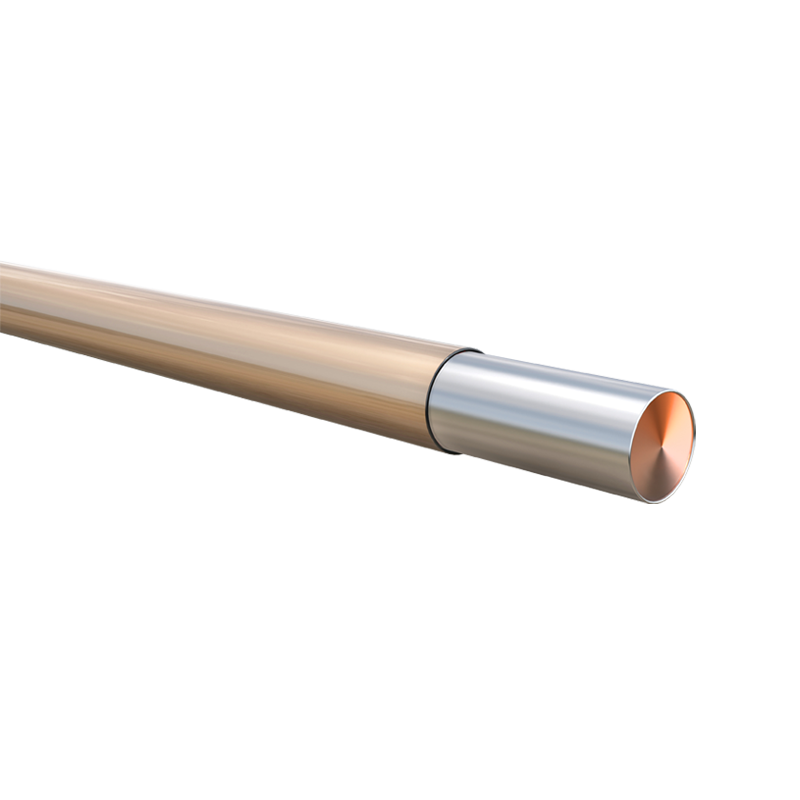
It is a high-performance material within the medical device tubing family.
Compared with ordinary general-purpose plastic tubing, medical PI tubing is more commonly found in products with demanding requirements for:
· Precision dimensions;
· Small-size structures;
· Thin-wall design;
· Structural stability;
· Complex medical device components.
In minimally invasive medical devices, catheter products are usually made up of multiple distinct components. PI tubing is particularly well suited to product designs with stringent requirements for precision dimensions and thin-wall structures.
Some of these components may need to serve as:
· An inner liner;
· Structural support;
· Component delivery;
· Other precision structural tasks.
PI tubing can serve as one option in the material design of these complex medical devices.
Therefore, Medical PI Tubing is a material component in the precision structural design of medical devices.
The medical device industry is continually driving product miniaturization.
In minimally invasive interventional devices in particular, product dimensions can be very limited.
For example, in interventional therapy, neurovascular, cardiovascular, and other minimally invasive medical device fields, catheters and related components often need to perform complex functions within a very limited space.
Engineers need to accomplish the following within that limited space:
· Component layout;
· Material combination;
· Structural design;
· Subsequent processing.
If tubing dimensional control is unstable, it can affect the entire medical device assembly.
Accordingly, medical device companies are paying increasing attention to precision tubing.
Driven by these needs, Medical PI Tubing has become a class of precision tubing worth attention within the high-performance medical device material system.
Different PI tubing products may have different specific performance.
It should therefore not be described in absolute terms apart from actual product specifications.
From a medical device design perspective, companies generally focus on the following aspects of PI tubing.
The miniaturization of medical devices makes dimensional control an important issue.
Some complex interventional devices in particular may require very small tubing components.
Engineers typically need to define:
· Inner diameter;
· Outer diameter;
· Length;
· Wall thickness;
· Dimensional tolerances.
These parameters directly affect subsequent component design.
Therefore, a Medical PI Tubing project usually starts from drawings and actual dimensional requirements.
The downsizing of medical devices tends to drive the development of thin-wall tubing.
If the wall-thickness design is unreasonable, it can affect:
· Internal space;
· Overall dimensions;
· Structural performance;
· Subsequent component assembly.
Therefore, thin-wall design is not simply a matter of pursuing “the thinner, the better.”
A truly reasonable design needs to balance product dimensions against structural requirements.
The actual achievable wall-thickness range should be based on real manufacturing capability and formal technical documentation.
Medical devices may experience different operating environments during manufacturing, transport, assembly, and use.
Therefore, tubing needs not only to meet dimensional requirements but also to be considered in relation to the overall product structure.
For PI tubing, companies need to evaluate it from the standpoint of the overall medical device design.
The performance of the final product cannot be judged from the material name alone.
As medical devices continue to develop, a single material is often insufficient to meet every requirement.
Accordingly, PI tubing may need to be combined with:
· Other polymer materials;
· Metal components;
· Reinforcement structures;
· Functional coatings;
to form integrated assemblies.
This makes Medical PI Tubing an important direction within the material systems of complex medical devices.
The specific application needs to be confirmed through product design and material evaluation.
The following introduces the application directions that medical PI tubing may involve.
Microcatheters are typical small-size medical devices.
In such products, material dimensions and structural design are usually very important.
PI tubing can be evaluated as one of the material solutions for the related precision components.
Companies need to determine, based on:
· Product dimensions;
· Method of use;
· Overall structure;
· Subsequent processing;
whether PI material is appropriate.
Neurovascular devices typically have highly complex structural requirements.
Products may need to perform multiple functions within a limited space.
Accordingly, precision tubing and material combinations become an important part of product development.
PI tubing may serve as one of the material directions for the related medical device components.
The specific application needs to be combined with the actual product design.
In some medical catheter designs, the interior may contain different types of tubular components.
Different materials perform different tasks.
PI tubing can be technically evaluated as a material solution for internal precision structures.
It should be noted that:
there is no unified standard for specific product structures.
Different medical devices may adopt entirely different design schemes.
Some medical devices need to deliver components through tubular structures.
Accordingly, internal dimensions and structural design are very important.
PI tubing can serve as one of the material directions for the related precision components.
An actual project needs to be assessed in conjunction with:
· Component dimensions;
· Delivery requirements;
· Product structure;
during evaluation.
As medical devices continue to shrink, the application scope of precision tubing keeps expanding.
Different products may have different material requirements.
Accordingly, Medical PI Tubing generally has a strong project-customization character.
No single material in medical device tubing can meet every product requirement.
Different materials may be suited to different product designs.
Therefore, when choosing PI tubing, companies should not simply ask:
“Is PI the best material?”
The more important question should be:
“Is PI suitable for my product?”
For example, a medical device project may focus more on:
· Flexibility;
· Structural support;
· Inner-layer performance;
· Multilayer structure;
· Surface treatment.
Different needs call for different material solutions.
Therefore, Medical PI Tubing should be selected within the complete medical device material system.
A complete project usually needs to start from product requirements.
The company first needs to clarify:
· What is the product?
· Which medical device is it used for?
· What function does the PI tubing perform?
· What development stage is the product currently in?
This information determines the direction of subsequent material evaluation.
Dimensions are an important foundation for a medical tubing project.
The following usually need to be defined:
· Inner diameter;
· Outer diameter;
· Length;
· Wall-thickness requirements;
· Key tolerances.
If the product has a special structure, detailed drawings also need to be provided.
PI tubing is generally not used in isolation.
Companies need to analyze:
Does it need to be combined with other materials?
Is it part of a multilayer structure?
Is subsequent processing required?
Is surface treatment required?
These questions all affect the final solution.
Medical device products may need to go through multiple manufacturing steps.
For example:
· Component assembly;
· Structural reinforcement;
· Coating;
· Heat treatment;
· Other post-processing.
Therefore, material selection needs to take the entire manufacturing process into account.
Sample development is an important step for verifying the project.
Actual testing helps companies confirm:
· Whether the dimensions match the design;
· Whether it is suited to component assembly;
· Whether it is suited to subsequent processing;
· Whether it meets the product structural requirements.
The miniaturization of medical devices makes dimensional accuracy increasingly important.
When multiple components need to be combined in particular, any dimensional change can affect the final product.
Accordingly, companies need to define the key dimensional requirements.
Wall thickness directly affects:
· Internal space;
· Overall outer diameter;
· Product structure;
· Subsequent component assembly.
It therefore needs to be designed for the specific medical device.
Different products may require:
· Short-size components;
· Long-length tubing;
· Custom lengths.
Length requirements can affect the manufacturing and subsequent-processing methods.
Complex medical devices usually adopt multi-material designs.
Therefore, the combination relationship between PI tubing and other components needs to be evaluated.
Companies need to state in advance:
whether the tubing later needs:
· Cutting;
· Forming;
· Assembly;
· Coating;
· Other processing.
This information helps carry out a complete technical evaluation.
Medical device miniaturization is not simply a matter of reducing product dimensions.
When product dimensions become smaller, the engineering challenges can actually increase.
For example:
Smaller dimensions mean:
· Tighter dimensional control;
· More complex component combinations;
· Higher manufacturing-precision requirements.
Accordingly, precision tubing becomes an important base material in medical device development.
As one direction within the high-performance precision medical tubing system, PI tubing can help engineers explore more complex small-size product designs.
But the specific product solution must be based on real engineering requirements.
When choosing a medical tubing supplier, comparing material price alone is not advisable.
For complex medical device projects, what matters more is whether the supplier can support the entire development process.
Medical device material projects differ from ordinary industrial tubing.
The supplier needs to understand:
· Product development;
· Dimensional requirements;
· Sample validation;
· Subsequent manufacturing.
The dimensions and structures of different medical devices may differ.
Accordingly, customization capability is very important.
R&D projects typically go through:
Concept design → Sample → Optimization → Small batch → Mass production
Whether the supplier can support this process deserves focused attention.
For complex projects, a company may need more than one type of PI tubing.
It may also require:
· Extruded tubing;
· Heat shrink tubing;
· PTFE tubing;
· Multilayer tubing;
· Other material components.
Therefore, comprehensive solution capability can improve project-development efficiency.
Addressing the core demand of minimally invasive interventional devices for “thin walls, high strength, and precision,” jMedtech has built a medical polyimide (PI) tubing solution covering three major series:
PI tubing / super-lubricious PI tubing: inner diameter as fine as 0.1 mm and wall thickness as thin as 0.0127 mm, combined with a super-lubricious surface treatment to deliver exceptional trackability for delivery through ultra-fine lumens;
Braided composite reinforced PI tubing: reinforced with 304V stainless steel or nitinol wire braiding, with selectable braid density of 30–150 PPI/WPI and support for multiple braid patterns of 2×2, 2×1, and 1×1 combined with flat or round wire, significantly improving kink resistance, torque transmission, and push support on top of an ultra-thin wall;
Composite-material PI tubing: incorporating engineering plastics such as Pebax, PA, and TPU to achieve a precise balance between proximal rigid support and distal atraumatic transition.
Across the entire series, inner-diameter tolerance is stably controlled at ±0.01 mm, and customized selection can be provided according to the structural needs of different devices such as balloon catheters, electrophysiology catheters, imaging catheters, and stone-retrieval baskets.
As medical devices continue to develop, future precision medical tubing may focus more on:
· Miniaturization;
· Ultra-thin-wall design;
· Multi-material combination;
· Multilayer structure;
· High-precision dimensional control;
· More complex customization requirements.
As part of the high-performance medical tubing system, PI tubing will also continue to serve the development needs of more complex medical devices.
In the future, competition between companies may not be only about material performance.
What matters more is:
who can help medical device companies move faster from product design to batch manufacturing.
Medical PI Tubing is one of the important directions in precision medical device material systems.
It is especially suited to medical device projects that need to focus on:
· Precision dimensions;
· Small-size structures;
· Thin-wall design;
· Complex components;
in their device projects.
However, choosing PI tubing cannot be detached from the specific product.
Medical device companies need to carry out project development through the complete process of:
Medical device companies need to carry out project development from:
Product application → Dimensional design → Structural analysis → Material evaluation → Sample development → Process optimization → Mass-production validation
It is advisable to consider medical device industry experience, customization capability, sample-development capability, quality systems, and long-term manufacturing support in a holistic way.
PI tubing can serve as one of the material solutions for microcatheters, interventional devices, and other small-size medical devices. The specific application needs to be confirmed according to the product design.
As medical devices continue to shrink, requirements for dimensional control, thin-wall design, and complex component structures keep rising.
Not necessarily.
Different medical catheters have different material and structural requirements and need to be evaluated against the actual product.
The actual product structure and manufacturing process can affect the material solution. Sample testing can verify the feasibility of dimensions, assembly, and processing.