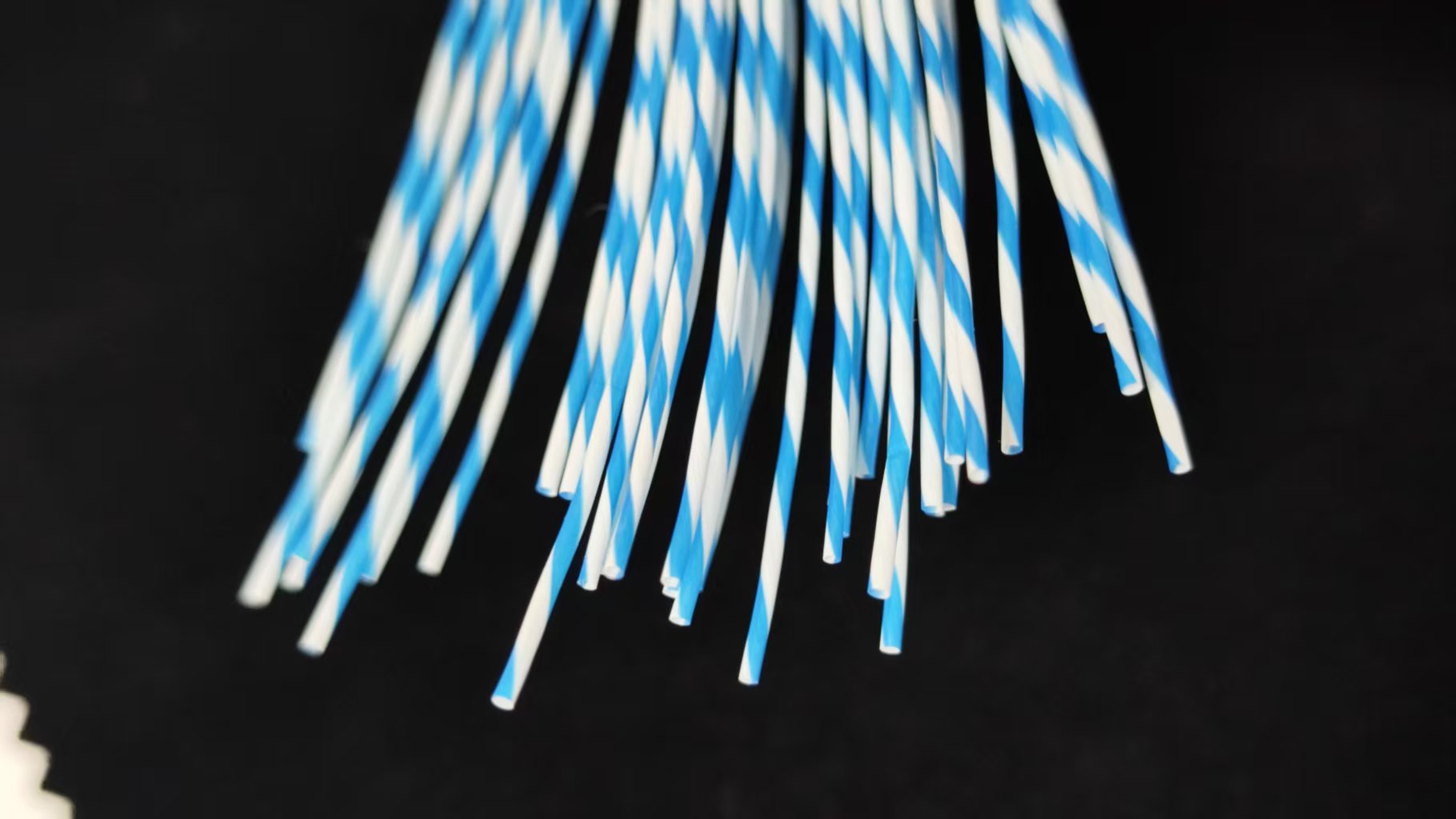
Medical Multi-Lumen Tubing is medical tubing with multiple independent internal channels.
Unlike Single-Lumen Tubing, which has only one internal channel, multi-lumen tubing forms multiple independent lumens within a single tube, allowing different functions to be carried out through different channels.
Depending on the design, multi-lumen structures can include:
·Central main lumen
·Satellite lumens
·Internal lumens
·External lumens
·Embedded lumens
In complex catheter designs, a large central lumen can serve as the main instrument or fluid channel, while the smaller surrounding satellite lumens can be used for guidewires, pull wires, pressure monitoring, fluid delivery, or other control functions.
This structure enables multi-function integration within a limited space and is therefore widely used in the design of advanced catheters and minimally invasive medical devices.
The development of minimally invasive medical devices continues to move towardsmaller dimensions, more complex structures, and greater functional integration.
Although traditional single-lumen tubing is simple in structure, one lumen can usually perform only one main function.
When a device needs to perform multiple functions at the same time, using several single-lumen tubes can lead to:
·Larger catheter outer diameter
·Lower utilization of internal space
·More complex assembly structures
·Additional connections required between multiple components
·Greater difficulty in overall catheter design
·Higher operational and control complexity
Multi-Lumen Tubing, on the other hand, can integrate multiple functional channels within a single tube.
For example, a multi-lumen catheter can combine:
Main guidewire channel + Pull wire channel + Fluid channel + Sensor channel
within a single structure.
Therefore, multi-lumen tubing is not simply about “increasing the number of lumens”; more importantly, it improves the functional integration of medical devices through redesign of the internal space.
The specific structure of multi-lumen tubing needs to be designed according to the function of the final medical device.
This is a common design in advanced multi-lumen catheters.
A larger lumen is placed in the center, with one or more smaller satellite lumens arranged around it.
Satellite lumens can be used for:
·Steering Wire
·Pull Wire
·Guidewire
·Fluid Delivery
·Pressure Monitoring
·Sensor Pathways
·Electrical Conductors
This structure is particularly suited to catheters that require distal control and multi-function integration.
One of the greatest advantages of multi-lumen design is the ability to integrate multiple functional channels within a limited outer-diameter space.
This is especially important for minimally invasive devices that need to be miniaturized.
By reasonably arranging the position and size of the lumens, more functions can be achieved without significantly increasing the overall outer diameter.
If different functions are handled by separate tubes, they ultimately need to be integrated through bonding, assembly, jacketing, or other methods.
Multi-Lumen Tubing can integrate multiple channels directly at the tubing design stage, thereby reducing some subsequent assembly complexity.
For steerable catheters, pull wires or control wires need to travel to the distal end through specific paths.
Multi-lumen structures can provide independent channels for these control components, supporting complex structural designs such as the Steerable Catheter.
Different lumens can perform different tasks. The final structure needs to be determined according to the specific medical device design.
Multi-Lumen Tubing can be used in a variety of advanced medical devices.
In cardiovascular interventional devices, multi-lumen structures can support the integration of guidewires, fluid delivery, pressure monitoring, and other auxiliary functions.
Typical applications include:
·Interventional catheters
·Balloon catheters
·Guiding catheters
·Pressure monitoring catheters
·Complex delivery systems
Neurovascular interventional devices usually need to navigate through very complex and narrow anatomical pathways.
Therefore, the device needs to combine:
·Miniaturization
·Flexibility
·Precise control
·Well-designed internal channels
Multi-Lumen Tubing can provide the design foundation for microcatheters, complex delivery systems, and distal control structures.
Compared with single-lumen tubing, multi-lumen tubing is significantly more difficult to manufacture.
Because the manufacturer must control not only the outer diameter and wall thickness but also, simultaneously, the following for each of the multiple lumens:
·Position
·Size
·Concentricity
·Shape
·Wall-thickness distribution
·Structural stability
Especially in thin-wall and micro structures, any offset in the position of a lumen can affect the performance of the final catheter.
Therefore, multi-lumen tubing manufacturing requires systematic control of materials, tooling, the extrusion process, and dimensional inspection.
When purchasing or developing multi-lumen tubing, you cannot focus only on “how many lumens there are.”
More importantly, the following factors should be evaluated according to the design requirements of the final medical device.
First, determine how many independent channels are needed.
Different functions require different lumen sizes.
The size requirements for guidewire channels, fluid channels, and pull wire channels may be entirely different.
It needs to be determined whether the lumens are:
·Internal arrangement
·External satellite lumens
·Embedded
·Symmetrical arrangement
·Asymmetrical arrangement
Complex structures usually need to be customized according to the device space.
Wall thickness directly affects:
·Outer diameter
·Internal space
·Flexibility
·Strength
·Pressure resistance
Therefore, a balance must be struck between space utilization and mechanical performance.
The material needs to be selected according to the final medical device's:
·Biocompatibility
·Friction properties
·Chemical stability
·Temperature environment
·Flexibility
·Strength
·Sterilization requirements
in making the choice.
PTFE is one of the important materials for multi-lumen medical tubing.
Its material properties, such as low friction and chemical inertness, make it suitable for medical devices with high requirements for internal sliding performance and dimensional stability.
For structures in which guidewires, control wires, or other components need to move through internal channels, the low-friction inner surface can help reduce movement resistance.
At the same time, PTFE can also be formed into thin-wall, multi-lumen, and complex geometric structures through specialized processing.
jMedtech's currently published PTFE Multi-Lumen Tubing products use one large central lumen and 1–4 satellite lumens and support different arrangements of the satellite lumens.
For medical device OEMs and R&D companies, multi-lumen tubing is not a simple standard component.
When selecting a supplier, it is advisable to focus on:
Multi-lumen structures require stable control of multiple internal channels, so the supplier needs precision tubing manufacturing capability.
An excellent supplier should be able to carry out custom development according to lumen structure, dimensional requirements, and performance requirements.
The medical device supply chain needs to consider the supplier's quality management systems, material traceability, and production process control.
For new product development, the supplier needs not only to “manufacture according to drawings” but also to be able to participate in engineering collaboration on materials, structures, and processes.
jMedtech focuses on solutions related to medical coatings, PTFE medical tubing, precision extruded tubing, coating equipment, and more.
Its PTFE Multi-Lumen Tubing uses a combined structure of a central main lumen and satellite lumens and can be customized according to medical device design requirements. The products support:
·One central main lumen
·1–4 satellite lumens
·Internal, external, or embedded satellite lumens
·Round, oval, and other lumen structures
·Thin-wall design
·Custom medical device development
For complex catheter designs, jMedtech can also combine its PTFE tubing, precision extruded tubing, and medical coating products to provide medical device manufacturers with more complete materials and tubing solutions.
Future medical device development will continue to drive multi-lumen tubing in the following directions:
Smaller dimensions
Medical devices continue to become more miniaturized and need to integrate more lumens within a smaller outer diameter.
More complex geometric structures
Beyond round shapes, oval, asymmetrical, and custom cross-sectional structures will meet more special device needs.
Greater functional integration
Future catheters may integrate guidewire, control, fluid, sensing, and electrical functions within a single structure.
Higher degree of customization
As the degree of product differentiation among medical device OEMs increases, standardized tubing can hardly meet every application, and custom multi-lumen tubing will become an important direction.
By integrating multiple independent channels within a single tube, Medical Multi-Lumen Tubing helps medical device manufacturers achieve more functions within a limited space and supports the development of steerable catheters, interventional catheters, delivery systems, and other complex minimally invasive devices.
For medical device projects requiring high precision, small dimensions, and complex internal structures, it is especially important to choose a supplier withmaterials capability, precision extrusion capability, custom development capability, and a medical quality system.
Medical Multi-Lumen Tubing is tubing with multiple independent channels designed within a single medical tube, which can be used to integrate guidewires, fluids, control wires, sensors, and other medical device functions.
PTFE Multi-Lumen Tubing can be used in complex catheters, steerable catheters, interventional devices, delivery systems, and other medical devices requiring low friction and multi-channel structures.
Yes. Multi-lumen tubing usually needs to be customized according to the medical device's outer diameter, number of lumens, lumen size, position, wall thickness, and material requirements.
The specific number depends on the product structure and manufacturing capability. jMedtech's current PTFE Multi-Lumen Tubing products use one central main lumen and 1–4 satellite lumens.
It is recommended to focus on evaluating the supplier's precision extrusion capability, dimensional control capability, custom development capability, medical quality systems, material traceability capability, and engineering collaboration capability.
Contact our technical experts to discuss your project or request a sample.