Choosing the right polyimide tubing for a catheter program isn't just a materials decision — it's a design decision that can make or break your device's performance in the clinic. I've seen projects stall for months because teams picked the wrong tubing type early on, then had to redesign everything around kink resistance or friction issues that could've been avoided from day one.
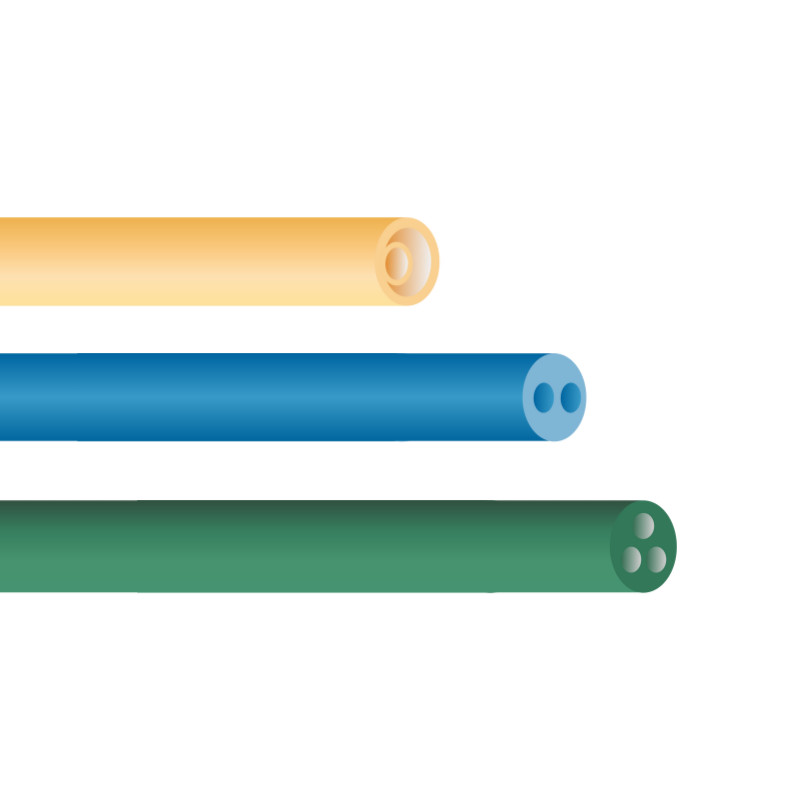
Polyimide (PI) pipes come in a wide variety of types, each with its own performance focus. Standard wall thickness pipes offer excellent pressure resistance; the ultra-lubricated series can reduce the coefficient of friction by 25%; for applications requiring high resistance to torsion and bending toughness, braided composite pipes are available; there are also multi-material composite pipes, which combine PI with materials such as PTFE, Pebax, TPU, and PA12 – a single base material often cannot meet all application requirements, and composite structures can compensate for performance shortcomings.
Not all polyimide tubing is created equal — and honestly, treating it like a commodity is one of the biggest mistakes I see in early-stage device development. The differences between tubing types aren't just marketing labels. They represent fundamentally different manufacturing processes, performance profiles, and cost structures. Let's walk through what's on the market.
Standard PI tubing gives you exceptional dimensional accuracy with tolerances down to ±0.0002", inner diameters ranging from 0.004" all the way to 0.098", and burst pressures that don't quit — we're talking PSI ≥ 20,000. That's the kind of pressure rating that lets you design balloon catheters without constantly worrying about wall integrity.
What makes standard PI tubing so popular? It's the combination of thin walls and high strength. You can get down to incredibly small IDs — 0.004" is about the limit for most polymer tubes — while still maintaining structural integrity that metals would envy at those dimensions. It's available in five colors too — Amber, Black, Green, Yellow, and Red — which matters when your catheter line needs color coding for different sizes or configurations.
Standard PI tubing works great for pressure catheters, suture devices, and a wide range of diagnostic catheters where you need precision dimensions but don't have extreme friction or kink resistance demands.
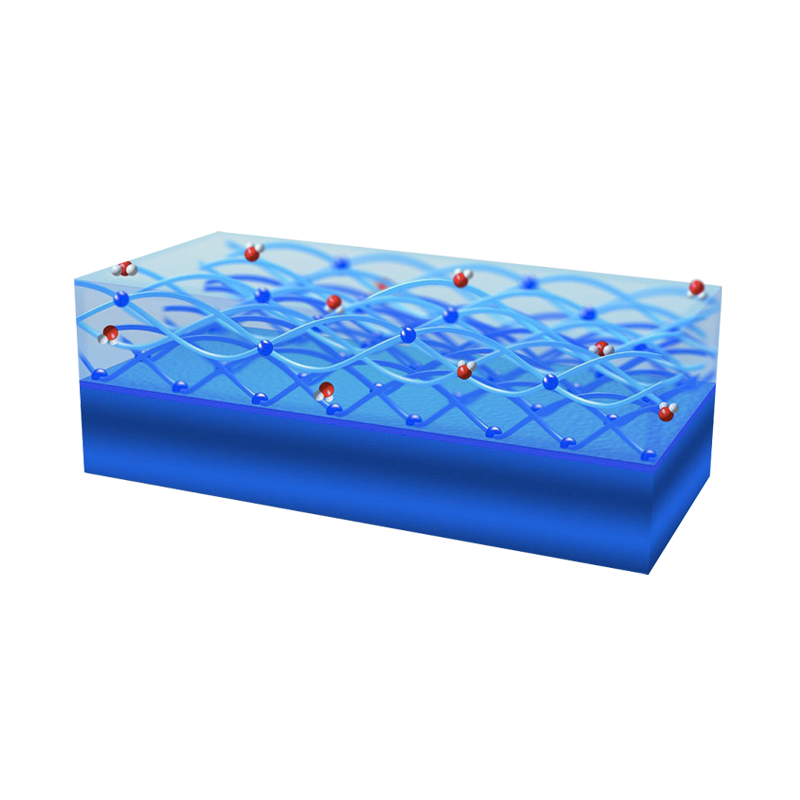
Now here's where things get interesting. Superlubricated PI tubing takes the standard platform and adds a surface treatment that reduces the coefficient of friction by 25%. That number — 25% — might sound modest on paper, but in a catheter that's navigating tortuous vasculature, that's the difference between smooth tracking and a procedure that feels like pushing a rope.
The spec sheet looks familiar: same ID range (0.004" to 0.098"), same tight tolerances (±0.0002"), same impressive burst pressure (PSI ≥ 20,000). Same color options too. But the surface behavior is a different animal entirely.
Where does superlubricated tubing really shine? EP catheters — where you're making repeated adjustments and need consistent, low-friction movement. Peripheral and neuro catheters that have to track through tight, winding anatomy. Any application where the tube is sliding through hemostasis valves, connectors, or other components and you need that friction to stay as low as possible throughout the procedure.
The trade-off? Cost. Superlubricated tubing costs more than standard, and that's just the reality. But here's what I tell teams — if your catheter's deliverability is the bottleneck in your design, the tubing upgrade cost is peanuts compared to the engineering hours you'd burn trying to solve friction problems downstream.
Sometimes, standard PI tubing — even the superlubricated version — just isn't enough. You need kink resistance. You need column strength. You need the tube to push through a 90° bend in a patient's anatomy without collapsing. That's when you move to braided composite reinforced PI tubing.
This is where things get seriously tricked out. The tubing incorporates a braid — either 304V Stainless Steel or Nitinol — into the PI tube wall. The braid acts like a skeleton, preventing the tube from kinking even under extreme bending stresses, while the PI maintains the biocompatibility, thermal stability, and dimensional precision you need.
The ID range narrows slightly — 0.010" to 0.098" — and tolerances open up a bit to ±0.0004". That's still extremely tight by any reasonable standard, but the manufacturing process is more complex, so you give up a small amount of dimensional precision in exchange for massive gains in mechanical performance.
Where you'll see this type: peripheral catheters that need to track through femoral access, neuro catheters navigating the Circle of Willis, any steerable catheter where torque response and pushability are critical. If your device needs to survive repeated sharp bends without kinking — this is your tubing.
This is the most advanced — and frankly, the most exciting — category. Composite PI tubing combines polyimide with other polymers like PTFE, Pebax, TPU, or PA12 in a single, co-extruded tube structure. The idea? Each material handles what it does best, and you get a tube that performs like a custom solution without the headache of assembling multiple components.
Think of it this way — it's like a multi-layer jacket. The outer layer handles abrasion, the middle layer provides structure, the inner layer keeps things slick. Each layer does its job, and the overall performance is better than any single material could achieve alone.
ID range matches the braided option: 0.010" to 0.098". But the real story is in the design flexibility. Need PTFE's lubricity on the inner lumen with PI's strength on the outer wall? Done. Want Pebax's flexibility in one section and PI's rigidity in another? That's what composite tubing delivers.
This type shows up in the most demanding catheter platforms — imaging catheters that need both acoustic transparency and pushability, complex therapeutic delivery systems, steerable devices where different zones of the tube need fundamentally different mechanical properties. It's not cheap, and it's not fast to develop, but for the right application, nothing else comes close.
So how do these tubing types map to real-world catheter programs? Let me break it down by application — because honestly, the catheter type usually dictates the tubing choice more than anything else.
Balloon catheters — This is where standard PI tubing earns its keep. You need the high burst pressure (PSI ≥ 20,000 is practically mandatory here) and the tight tolerances for consistent balloon inflation. The thin walls of PI tubing let you maximize the balloon lumen without sacrificing structural integrity. Most balloon catheter programs start with standard PI and only move to other types if there's a specific deliverability concern.
EP catheters — Electroanatomical mapping and ablation catheters typically demand superlubricated PI tubing. These devices go through multiple exchanges, connector engagements, and valve passages during a single procedure. That 25% friction reduction? It compounds over hundreds of adjustments and makes a real difference in the electrophysiologist's feel and control.
Pressure catheters — Standard PI tubing is the default here. You're primarily measuring pressure, so dimensional accuracy and pressure integrity matter most. The ±0.0004" tolerance ensures consistent pressure transmission, and the high burst pressure gives you the safety margin you need.
Peripheral and neuro catheters — This is where you'll see braided composite reinforced tubing show up most often. These catheters navigate the most tortuous anatomy in the body — femoral arteries, cerebral vasculature — and they can't afford to kink. The stainless steel or Nitinol braid provides the kink resistance that keeps the lumen open even under extreme bending.
Endoscopic and imaging catheters — These are where composite PI tubing really proves its value. Imaging catheters need specific acoustic or optical properties that a single PI tube might not deliver on its own. By combining PI with other materials, you can tune the tube's performance across multiple parameters — stiffness, transparency, lubricity — all in one integrated structure.
Suture devices and lithotomy baskets — Standard PI tubing handles these well. Suture devices benefit from PI's precision dimensions for consistent suture deployment. Lithotomy baskets need the thin-wall, high-strength profile that PI delivers naturally. Both applications are relatively straightforward from a tubing standpoint.
Steerable catheters — Here's where the decision tree gets interesting. A basic steerable catheter might work with superlubricated PI. But if you need high torque response, extreme pushability through tight anatomy, or resistance to repeated articulation cycles — braided composite reinforced PI is usually the right call. Some advanced steerable platforms even use composite PI tubing to combine steerability with specific lumen properties.
so how do you actually make the call? Here's a practical framework that I'd recommend walking through, step by step. It's not rocket science, but it does force you to think through the requirements systematically rather than just guessing.
Step 1: Start with your ID requirement. What inner diameter does your catheter need? If you're below 0.010", your choices are basically limited to standard or superlubricated PI — the braided and composite types don't go below 0.010". If you're above 0.010", all four types are on the table.
Step 2: Assess your kink resistance needs. This is probably the single most important filter. Run through your catheter's bending profile — what's the tightest radius it'll encounter in the body? How many cycles of bending will it see? If the answer is "tight bends and repeated cycles," braided composite is almost certainly your path. If you're dealing with gentle curves and one-time navigation, standard or superlubricated will likely be fine.
Step 3: Think about friction. What's the deliverability requirement? Is your catheter going through hemostasis valves multiple times? Is it tracking through long, narrow sheaths? Are you building an EP catheter that gets adjusted dozens of times per procedure? If any of these are yes, superlubricated tubing is worth the premium. Don't leave friction as an afterthought — I've seen teams scramble to add lubricity treatments mid-program because they under-estimated how much friction would matter clinically.
Step 4: Do you need multi-material performance? If your catheter needs different properties in different zones — or if you need the lumen surface to behave differently than the outer wall — composite PI tubing is your only real option without resorting to multi-piece assembly. This is the most expensive and longest-lead-time path, so don't go here unless you genuinely need it.
Step 5: Check your timeline and budget. Standard PI tubing ships in about 3 days. Superlubricated is similar. Braided composite and composite PI take longer — the manufacturing processes are more involved, and custom configs need development time. If you're in early prototype and just need to test function, start with standard and upgrade later. If you're heading into design verification, you need to be on the right tubing type already.
Here's the bottom line: most catheter programs don't need to start with the most advanced tubing. Start with the simplest type that meets your primary performance requirement, then upgrade only if testing reveals a gap. It's cheaper, faster, and — honestly — it leads to better designs because you're not over-engineering from day one.
Let's talk about the stuff that doesn't show up in spec sheets but absolutely matters when you're building a real device for real patients.
Tolerances matter more than you think. The difference between ±0.0002" and ±0.0004" might look tiny — but in a catheter with a 0.010" ID, that's a 10-20% variation band. For balloon catheters where inflation volume directly affects balloon diameter, tight tolerances aren't a nice-to-have — they're a clinical requirement. Make sure your tubing supplier can consistently hold the tolerances you need, lot after lot.
Wall thickness consistency. PI tubing is drawn — not extruded — which gives it inherently better wall consistency than most polymer tubes. But even within drawn tubing, there's variation. Ask your supplier about wall thickness COV (coefficient of variation) and make sure it meets your needs. For high-pressure applications, uneven walls create weak points.
Color coding and traceability. Five standard colors — Amber, Black, Green, Yellow, Red — give you enough range for most product line differentiation. But if you need custom colors or specific marking requirements, that's a conversation to have early. Some suppliers can do it; others can't. And lead times change when you go custom.
Supply chain resilience. This is the one that bites people. You've got a qualifying supplier, everything's great — then their single production line goes down for maintenance, and suddenly you're scrambling for tubing with a 12-week lead time. Ask about backup capacity, multi-site manufacturing, and what happens when things go wrong. It's not glamorous, but it's the kind of question that saves programs.
Regulatory documentation. PI tubing for medical devices needs the right documentation package — biocompatibility data, dimensional inspection reports, lot traceability. Make sure your supplier provides this as standard, not as something you have to fight for. If they can't give you a clean, audit-ready documentation package, walk away.
Now, here's where I'll mention a specific supplier — because after laying out all these specs and considerations, it's worth knowing who can actually deliver across the full range.
jMedtech is a medical device CDMO based in xiamen, operating across three ISO 13485-certified factories with a combined footprint of over 220,000 square feet. They've built their reputation in the catheter space — 60+ million cardiovascular catheters produced, 600+ customers across 30+ countries, and a product portfolio that covers the full PI tubing spectrum.
Here's what they offer on the PI tubing side:
• Standard & Superlubricated PI Tubing:https://jmedtech.com/Superlubricated-PI-Tubing.html
• Braided Composite Reinforced PI Tubing: https://jmedtech.com/Superlubricated-PI-Tubing.html
• Composite PI Tubing: https://jmedtech.com/Superlubricated-PI-Tubing.html
What sets jMedtech apart isn't just the tubing specs — it's that they're a CDMO, not just a tube supplier. That means if you need to go from tubing to a finished catheter assembly — with balloon bonding, tip forming, braid integration, or any of the other steps in catheter manufacturing — they handle that under one roof. Five affiliated companies cover the full chain from raw tubing to finished, packaged devices.
You can explore their PI tubing capabilities directly:
• Braided Composite Reinforced PI Tubing
It depends on your balloon size and inflation requirements, but most balloon catheter programs land somewhere between 0.010" and 0.040" ID for the inflation lumen. The key is making sure your tubing can handle the burst pressure — tighter tolerances (±0.0002") are critical for consistent balloon inflation. Start by calculating your required inflation volume and pressure, then work backward to the minimum ID that delivers both. If you're in the 0.004" to 0.098" range, standard PI tubing has you covered.
Short answer — when friction is a clinical problem or a design bottleneck. If your catheter passes through hemostasis valves repeatedly, tracks through long sheaths, or needs to feel smooth during repeated repositioning (like EP catheters do), superlubricated is the move. That 25% friction reduction adds up fast over a 2-hour procedure. If your catheter is relatively short, doesn't go through tight connectors, and friction isn't something your clinical team has flagged — standard PI tubing will work fine and save you money.
Standard PI tubing alone? Honestly, probably not for the most demanding neuro applications. Neuro catheters navigate some of the tightest, most tortuous anatomy in the body — and standard PI, while strong, will kink if you bend it past its minimum radius repeatedly. That's why braided composite reinforced PI tubing exists — the stainless steel or Nitinol braid keeps the lumen open even under extreme bending. If you're designing a neuro catheter, start with braided composite and test from there.
Standard PI tubing in stock configs typically ships in about 3 days. Superlubricated versions are similar if they're in standard sizes. But once you get into braided composite, composite multi-material, or custom dimensions — you're looking at longer timelines, typically several weeks for development samples and longer for production quantities. The exact timeline depends on how custom your spec is. Early in a program, plan around standard configs to keep your prototype cycles fast, then transition to the custom tubing once your design is locked.
The telltale sign is when you need two or more conflicting properties in the same tube — like wanting PTFE-level lubricity on the inner surface but PI-level strength on the outside, or needing a flexible distal section transition to a rigid proximal section. If you're currently solving this by bonding multiple tube segments together or adding separate liners, composite PI tubing can replace that assembly with a single, integrated tube. It's more elegant, it's more reliable (fewer bond failures), and in volume, it's often cheaper than multi-piece assembly. The catch is development time — composite tubing takes longer to qualify than standard PI, so plan your timeline accordingly.
Contact our technical experts to discuss your project or request a sample.