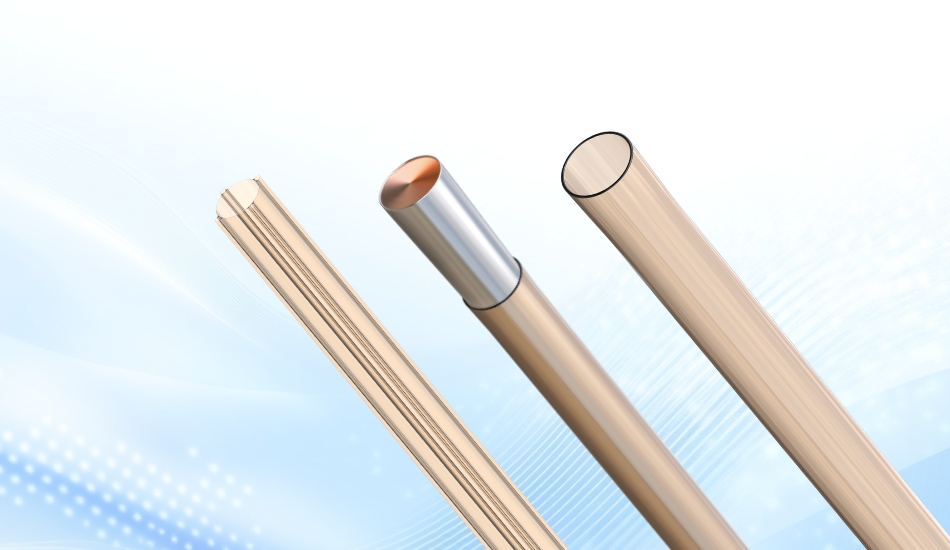
In the era of rapidly advancing minimally invasive interventional medicine, the requirements that medical devices impose on upstream materials have become increasingly stringent. From design to mass production, a single catheter often involves the coordinated interplay of dozens of precision materials — and heat shrink tubing is one of the indispensable key components.
Heat shrink tubing plays multiple roles in medical device manufacturing: it can serve as a temporary protective sleeve during catheter processing, provide insulation, sealing, and identification functions in the final product, and assist in the assembly and fixation of precision components. As interventional devices continue to trend toward smaller diameters, thinner walls, and higher precision, the material performance and processing accuracy of heat shrink tubing face unprecedented challenges.
From cardiovascular intervention to neurointervention, from peripheral vascular to urological devices, heat shrink tubing is involved in the manufacturing of virtually every type of minimally invasive interventional device. Choosing the right medical-grade heat shrink tubing affects not only the final performance of the product but also directly impacts production efficiency and cost control.
Heat shrink tubing is a polymer tube that has undergone radiation cross-linking or chemical cross-linking treatment, giving it a "memory effect" — when heated to a specific temperature, the tubing shrinks radially to its original dimensions. This property enables it to conform tightly to various substrate surfaces, achieving sealing, protection, and insulation functions.
When selecting medical-grade heat shrink tubing, the following core parameters deserve close attention:
Shrink Ratio: The ratio of the expanded inner diameter to the recovered inner diameter. Common shrink ratios include 2:1, 3:1, 4:1, and 6:1. A higher shrink ratio means stronger radial shrinkage, making the tubing suitable for covering more irregular shapes. In the precision medical device field, high shrink ratio tubing (such as 6:1) is particularly important because it can accommodate components of different diameters over a wider range.
Wall Thickness: Wall thickness directly affects mechanical strength, flexibility, and thermal conductivity. Medical-grade heat shrink tubing typically starts from 0.01 mm wall thickness; ultra-thin-wall designs minimize the impact on overall device dimensions.
Operating Temperature Range: Medical-grade PTFE heat shrink tubing typically has an operating temperature range of −200°C to 260°C, with a recovery temperature between 330°C and 350°C. This broad temperature range allows it to adapt to a variety of processing and usage environments.
Axial Shrinkage: High-quality medical-grade heat shrink tubing controls axial shrinkage within 0–5%, ensuring that the shrinkage process does not cause component deformation or displacement along the axial direction.
During catheter manufacturing, heat shrink tubing is an indispensable auxiliary material. In balloon catheters, for example, it can be used at the bond transition area between the balloon and catheter shaft to provide a smooth outer diameter transition and reduce blood flow resistance. In the manufacture of guiding catheters, heat shrink tubing secures each layer (such as the inner liner, braided layer, and outer jacket), ensuring tight bonding of the multi-layer structure.
During interventional device assembly, heat shrink tubing is commonly used in the following scenarios:
· Component Fixation: Secures precision components such as guidewires and coils in specific positions
· Sealing Protection: Provides reliable sealing at device connection points to prevent fluid leakage
· Insulation Isolation: Provides electrical insulation in energized devices such as electrophysiology catheters
· Strain Relief: Provides strain relief at device bending zones to prevent fatigue fracture
Electrophysiology catheters have unique requirements for heat shrink tubing. Because procedures such as radiofrequency ablation involve electrical current conduction, the tubing must possess excellent insulation and temperature resistance. The high dielectric strength and wide temperature range of PTFE make it an ideal material choice for electrophysiology catheter heat shrink tubing.
Beyond interventional devices, heat shrink tubing is also widely used in:
· Component encapsulation in endoscopic instruments
· Handle covering for surgical instruments
· Tubing connections in in vitro diagnostic equipment
· Sealing protection for implantable devices
PTFE and FEP share similar chemical properties but differ significantly in shrink ratio, temperature range, optical properties, and mechanical characteristics. The key to selection is: identify which performance matters most for your device application.
Cardiovascular Interventional Devices: PTFE Heat Shrink Tubing Preferred
Cardiovascular interventional devices typically use multi-layer composite structures involving thermal compression bonding of PTFE inner liners, braided/coil reinforcement layers, and polymer outer sheaths. This process imposes three hard requirements on heat shrink tubing:
· High shrink ratio, high temperature resistance, and low-friction surface
Scenarios Requiring Visualization: Choose FEP Heat Shrink Tubing
Some interventional devices require observation of internal component status during manufacturing or use — for example, checking for bubbles inside laminated catheters, confirming stent crimping positions, or achieving optical visualization during procedures. FEP heat shrink tubing is the best choice for these scenarios:
· Excellent optical transparency and concentricity ≥ 90%
· Good flexibility and low-temperature embrittlement resistance: FEP maintains good flexibility in low-temperature environments without brittle fracture, making it suitable for devices operated or stored under cold conditions
Selection Tip: For scenarios requiring intraoperative visualization or visual inspection of internal conditions during manufacturing, choose FEP heat shrink tubing.
Although heat shrink tubing is just one of many materials in medical devices, its performance and quality directly affect the reliability of the final product. Choosing the right medical-grade heat shrink tubing requires comprehensive consideration of material properties, specifications, application scenarios, and quality certifications.
jMedtech has deep technical expertise in the field of medical-grade heat shrink tubing, offering a complete product line of PTFE and FEP heat shrink tubing with shrink ratios up to 6:1 and wall thicknesses as low as 0.01 mm, capable of meeting a wide range of needs from microcatheters to large guiding catheters. Products are manufactured throughout in Class 10,000 cleanrooms, with uniform shrinkage, smooth surfaces, no wrinkles, and axial shrinkage controlled within 0–5%. Comprehensive customization services include shrink ratio, color, dimensions, zebra striping, and etching. Backed by 3 ISO 13485-certified factories and complete biocompatibility test reports, jMedtech provides medical device manufacturers with stable, reliable heat shrink tubing solutions, supporting success across the entire process from design to mass production.
Medical-grade heat shrink tubing differs fundamentally from ordinary industrial tubing in several dimensions:
1. Material Grade: Medical tubing uses medical-grade raw materials that meet biocompatibility requirements (ISO 10993), while ordinary tubing typically uses industrial-grade materials
2. Cleanliness: Medical tubing is produced in Class 10,000 or higher cleanrooms; ordinary tubing has no cleanliness requirements
3. Precision: The dimensional accuracy of medical tubing far exceeds ordinary products, with inner diameter tolerances controlled within ±0.0127 mm
4. Certification: Medical tubing suppliers must pass ISO 13485 and other medical device quality system certifications
5. Traceability: Medical tubing must provide complete batch traceability records
Shrink ratio selection should follow these principles:
· Ensure the expanded inner diameter is larger than the maximum outer diameter of the component being covered (a 10–20% margin is recommended)
· Ensure the recovered inner diameter is less than or equal to the target fit dimension
· When requirements are met, prefer a lower shrink ratio (more stable performance)
· For covering irregular shapes, a higher shrink ratio may be selected
Ensuring biocompatibility requires addressing the following aspects:
6. Select materials that have passed ISO 10993 testing
7. Confirm that the supplier has complete biocompatibility test reports
8. Avoid introducing contaminants during the production process
9. Choose appropriate sterilization methods (such as ETO, gamma irradiation, etc.)
Conduct biocompatibility re-validation on the final product.
Contact our technical experts to discuss your project or request a sample.